Busan Food Tour: 6 Bookable Picks + 5 Walk-Up Dishes (2026)
Busan food tour guide: Jagalchi sashimi, dwaeji-gukbap, milmyeon, BIFF Square. 6 small-group picks + 5 walk-up dishes with English notes and USD prices.
You ate Korean BBQ and Gwangjang street food in Seoul. Now you want what Seoul doesn’t have — pork-bone soup boiled overnight, refugee-era cold wheat noodles, raw fish picked off the dock at Jagalchi. This is the Busan food layer.
TL;DR — pick the food experience that matches your traveler type
Busan’s food identity is its own thing. The city invented milmyeon (cold wheat noodles) during the Korean War when buckwheat ran out, the Samjin and Goraesa fish-cake halls trace to early-20th-century Busan ports, and dwaeji-gukbap — pork-bone soup over rice — is the dish locals will defend in arguments with Seoulites. Below are four common food-traveler types and the pick we’d start each one with.
| Traveler type | First-pick experience | Why it works |
|---|---|---|
| First-timer extending a Seoul trip | #1 Sky Capsule + Jagalchi + street food day tour | Only inventory SKU bundling Jagalchi with active street-food sampling. |
| Foodie connoisseur (off-tourist-path) | #6 Mangmi-dong alley walk + walk-up dwaeji-gukbap morning | Local curator, Suyeong-gu inland, the alley where Busan natives eat. |
| K-content fan (Train to Busan / Squid Game S2 / BIFF) | #5 Night snap with BIFF Square ssiat-hotteok stop + #4 Songdo photo tour | Cinematic mood plus on-route street-snack stop. No literal film tour exists. |
| Couple seafood evening | #3 Jagalchi night auction walk + walk-up Jagalchi 2F sashimi | Auction-floor access plus the actual sashimi dinner you walk up to yourself. |
Across the six bookable picks the average MyRealTrip rating is 4.95 when limited to picks with reviews — but two picks sit at 0/0 reviews because they’re newly listed and uniquely fill gaps. Read the inventory honesty section below before you book anything.
Why Busan food is a separate trip from Seoul food
If you’re stacking Seoul and Busan in the same Korea trip, the question to settle on Day 1 of trip planning is what to eat where. The honest answer: Seoul gets BBQ, chicken-and-beer, kimchi class, Gwangjang. Busan gets the regional dishes Seoul restaurants either don’t serve or serve as a tribute act. Five dishes you should plan around:
- Dwaeji-gukbap (돼지국밥) — boiled pork-bone broth over rice, condiments dialed in at the table. The Busan answer to Seoul’s seolleongtang. Walk-up only; the alleys are in Seomyeon and around Busan Station.
- Milmyeon (밀면) — cold wheat noodles in icy beef-radish broth. Korean War invention. Sweeter and chewier than Pyongyang-style naengmyeon. Walk-up only; Gaegeum and Gaya are the two reference districts.
- Hoe (회) — raw fish slabs by weight. Not Japanese-style sashimi. Pick fish on Jagalchi 1F, eat upstairs on 2F. Walk-up only.
- Eomuk (어묵) — fish cake. Busan-origin (Samjin Eomuk and Goraesa Eomuk halls trace to early-20th-c Busan). Different format from Seoul’s odeng street carts. Walk-up at any market.
- Ssiat hotteok (씨앗호떡) — seed-stuffed pancake. Busan invention from BIFF Square in the 1990s. Walk-up at BIFF Square.
We’ll get to detailed explainer blocks for each of these below. The frame to hold is that most of Busan’s signature food is walk-up, not tour-bookable. The six MyRealTrip picks that follow either bundle a market food sampling, give you a guide who orders in Korean for you, or build a photogenic night experience around BIFF Square and Jagalchi. The rest of the eating happens on your own at counter seats or fish-tank stalls. That’s the editorial reality this article respects.
If you’re undecided whether to even add Busan to your Korea itinerary, the Busan things-to-do 2026 guide is the broader frame. If you already did Gwangjang and the kimchi class in Seoul and want the Busan layer specifically, you’re in the right article.
An honest inventory disclosure — read this before the picks
Most “best Busan food tour” articles on international OTAs pad to 10 attractions and quietly skip whether anything is actually bookable in English. We’re going to be upfront, because the picks below only make sense in this context.
MyRealTrip’s Busan food-anchored TOUR inventory is structurally thin. It’s the second-largest city in Korea but the third or fourth-largest English-bookable food-tour supply on the platform behind Seoul, Jeju, and depending on the season, Gyeongju. Five specific gaps matter for this article and we name them:
- No Jagalchi 2F sashimi rooftop SKU. The single most famous Busan food experience — pick a fish on the 1st floor, the vendor cleans it, you eat upstairs — is not bookable as a guided tour through MyRealTrip. We address this in the walk-up section below with a step-by-step plan.
- No Millak Hoe Town SKU. Busan’s signature couple-with-Gwangan-Bridge-view sashimi hall — also not bookable as a tour. Walk-up plan below.
- No dedicated dwaeji-gukbap walking-tour SKU. Korea’s deepest pork-soup alley is in Seomyeon, with a secondary cluster around Busan Station. Neither has an English-friendly bookable tour. Walk-up plan below.
- No dedicated milmyeon-halls comparison SKU. Gaegeum vs Gaya is the local debate; no inventory addresses it. Walk-up plan below.
- No K-content filming-spots + food crossover SKU. Squid Game S2 filmed in Saha-gu and Yeongdo, Train to Busan’s KTX arrival sequence is structural to the film, and BIFF Square is a literal landmark of Korean cinema. None of that is bundled with food in current inventory. We address this with a self-walk callout.
Zero of the six picks below are sold as English-narrated experiences. Same honest pattern as Seoul’s market tours and Busan’s broader things-to-do article. The MyRealTrip platform handles English checkout and foreign-card payment — that’s the genuine English layer. On-tour, expect Korean-led guidance with translation-app handouts. The six picks below all work for English-speakers because the experiences themselves are visual or directional: a market walk where the guide orders for you, a night photo walk with stop-here pose-here direction, an alley walk where the alleys speak for themselves.
We’re calling all of this out at the top instead of burying it in a footer because it’s the article’s editorial moat. Competitors don’t disclose inventory thinness; we will.
How we picked these six
The rule on this site is rating cutoff plus persona coverage plus inventory honesty. For Busan food we relaxed the review-count floor harder than the things-to-do article, because the food-anchored corner of MyRealTrip’s Busan inventory is genuinely thinner.
- Rating cutoff: 4.5+ where any rating exists.
- Review-count floor: 30+ relaxed. Two picks (#2, #5) clear it cleanly. One pick (#5) clears 100+. Three picks (#1, #3, #4 and #6) sit at 0–1 reviews and we surface each one explicitly because it uniquely fills a gap no other inventory product fills.
- Persona coverage: BF1 first-timer Seoul-extension / BF2 foodie connoisseur / BF3 K-content fan / BF4 couple seafood. Achieved across all six picks with explicit inventory-gap acknowledgment for BF2 and BF4.
- Food-experience-type spread: 1 market + street food crawl (#1), 2 city-with-food-incidental combos (#2, #5), 1 seafood night (#3), 1 photo + maatjip half-day (#4), 1 local-curator alley walk (#6).
- Local-operator moat: every pick is small-group, locally-led on MyRealTrip’s Korean partner inventory. Klook, Viator, and GetYourGuide resell the same handful of large-bus Busan food tours, none of which actually deep-dive a single dish or market.
Data source: MyRealTrip public ratings and review counts as of early May 2026. We earn a commission on bookings made through our links, but we excluded any product that didn’t clear the rating threshold regardless of payout. USD figures are rough conversions at ~1,330 KRW per dollar; treat both KRW and USD as planning anchors, not quotes. Verify on the booking page before you commit.
1. Sky Capsule + Gamcheon + Jagalchi Market + Street Food Day Tour
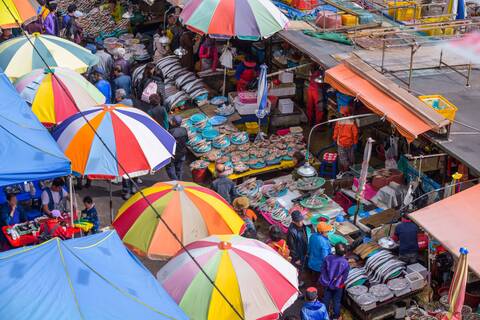
Sky Capsule + Gamcheon + Jagalchi Market + Street Food Day Tour
A full-day tour bundling the Mipo Sky Capsule, Gamcheon Culture Village, Jagalchi Market and Busan-style street-food sampling around BIFF Square and Nampo-dong. The only Busan SKU in inventory that pairs Jagalchi with active street-food tasting.
- ·Only inventory SKU bundling Jagalchi Market with active street-food sampling — the article's main-keyword anchor
- ·1-person-departure format eliminates the bus-tour worry
- ·Hits four signature Busan visuals in one booking (Sky Capsule, Gamcheon, Jagalchi, Nampo-dong street food)
- ·Foreign-card checkout via MyRealTrip
- ·Newly listed October 2025 — 0/0 reviews at time of writing, the article's biggest honesty caveat
- ·Korean-guided; visual circuit is the experience
- ·Long day (estimated 8–10 hours) with a moderate hill segment at Gamcheon
- ·Street-food sampling is tasting-portion, not a full meal
Best for: First-timers extending a Seoul trip who want one Busan day that hits the signature Jagalchi + street-food experience without a rental car (BF1). K-content fans who want the Sky Capsule + Gamcheon visual identity in one booking (BF3). Foodies who specifically want the Jagalchi anchor (BF2).
English support: Korean-guided. Sky Capsule itself is a private 2-pax cabin so language doesn’t apply during the ride. Gamcheon has bilingual signage. Jagalchi sampling is largely visual and the guide handles ordering on your behalf. Frame this as a logistics-handled day where the guide solves “I can’t read the Korean stall signs” rather than as a narrated cultural deep-dive.
What you’ll experience: A full-day combo built around the Jagalchi food-sampling segment. Mipo Sky Capsule is the suspended elevated coastal-rail system east of Haeundae — small 2-pax cabins glide along an elevated track for roughly 2 kilometers between Mipo and Cheongsapo, South Sea on one side, coast on the other. Gamcheon Culture Village is the rainbow-painted hillside neighborhood in Saha-gu, Korea’s most-photographed mural village. Jagalchi Market is the largest fish market in Korea, on Nampo-dong’s harbor edge. Street-food sampling then walks Nampo-dong’s alleys and BIFF Square stalls — ssiat hotteok, eomuk skewers, bibim-dangmyeon, Busan-style hotteok variants are typical inclusions. Confirm exact dishes at booking.
Why it’s the lead despite zero reviews: This is the only product in current MyRealTrip inventory that bundles Jagalchi Market with active street-food tasting. Without it the article cannot honestly call itself a Busan food-tour ranking. The 0/0 review count is the trade-off — newly listed October 2025 — and we’re flagging it as the article’s biggest honesty caveat. Same precedent as the DMZ niche-slot in our Seoul DMZ coverage. We will re-validate this listing in October 2026 and swap if the review base hasn’t accrued.
Honest cons: The 0/0 review count is real. Pricing and itinerary specifics are confirmed at booking, not in advance. Long day with moderate elevation at Gamcheon. Street-food sampling is “tasting portion,” not a full meal — readers expecting dinner should book a separate evening Jagalchi 2F walk-up sashimi (see walk-up section below).
Check Pick #1 on MyRealTrip
2. Yonggungsa + Gamcheon + Blue Line Park: The Workhorse Day to Bracket With Walk-Up Food
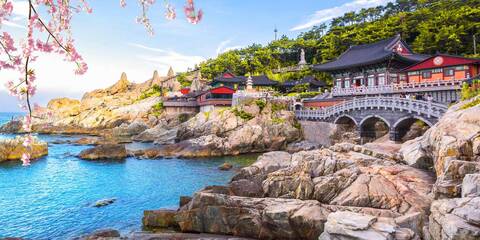
Yonggungsa + Gamcheon + Blue Line Park Guided Tour
The most-reviewed Busan-only city tour on MyRealTrip — bracket it with a morning dwaeji-gukbap walk-up before pickup and a post-tour BIFF Square ssiat-hotteok stop and you've done four food experiences in one day for one booking.
- ·240+ reviews at 4.9 — strongest social proof of any Busan-only tour
- ·Cheapest pick on the list (~USD 30) — rest of the day's budget goes to walk-up food
- ·Solves the no-rental-car problem for a first-timer Busan day
- ·Pairs cleanly with morning dwaeji-gukbap + post-tour BIFF Square walk-up
- ·Korean-guided — the visual circuit is the experience
- ·Gamcheon's hill segment is steep; not stroller-friendly
- ·Full-day commits ~8–10 hours of your trip
- ·No food included — bracket-with-walk-up is the framing
Best for: First-timers extending a Seoul trip who want a daytime Busan circuit that’s bookable in advance and easy to wrap food around (BF1). Travelers on a budget — at ~USD 30 this leaves the day’s food budget free for three or four walk-up dishes.
English support: Korean-guided, bilingual signage at all three stops. English-language audio apps cover Yonggungsa’s Buddhist context. Frame as logistics-handled scenic day with food bracketed around it on your own time.
What you’ll experience: Same circuit as Pick #1 in our Busan things-to-do article — Haedong Yonggungsa coastal Buddhist temple, Gamcheon Culture Village mural neighborhood, Blue Line Park coastal walk with optional Sky Capsule add-on. The food angle here isn’t on the tour, it’s the wrapper around the tour. We recommend the following day-shape:
- Pre-pickup (7:30–8:30am): Walk up at a Seomyeon dwaeji-gukbap alley stall or a Busan Station row stall. Order 돼지국밥 (twɛ-dʑi-kuk-pap), pay roughly KRW 9,000–12,000. Add chives and salted shrimp. Stir in a teaspoon of gochujang. Eat. ~USD 7–10. See dish explainer below.
- Tour (9am–6pm): Yonggungsa, Gamcheon, Blue Line.
- Post-dropoff (6:30pm–8pm): BIFF Square / Nampo-dong walk-up. Ssiat hotteok at BIFF Square (~USD 1.50–3 per piece) and bibim-dangmyeon at one of the BIFF stalls (~USD 3–5). See dish explainer below.
- Optional dinner (8pm onwards): Jagalchi Market 2F walk-up sashimi (see walk-up plan below) — ~USD 35–80 per person.
That sequence delivers four signature Busan dishes plus the daytime city circuit for around USD 80–110 per person all-in including the booking. It’s the highest-density single-day Busan food-and-sights frame we’ve found.
Why this is the workhorse pick rather than the food-anchor pick: Pick #1 has the explicit Jagalchi food-sampling segment but also has the 0/0 review caveat. Pick #2 has 240 reviews of social proof but no food included. The bracket-with-walk-up frame is the workaround, and the single-day dish density is genuinely better than either pick alone.
Honest cons: No food included on the tour itself — the framing here is bring-your-own. The 8–10 hour day plus four food stops is intense; if you’d rather a slower pace, do the tour one day and the walk-up dishes a separate day.
Check Pick #2 on MyRealTrip
3. Busan Night & Jagalchi Seafood Auction: Couple Walk for the Sashimi-Curious
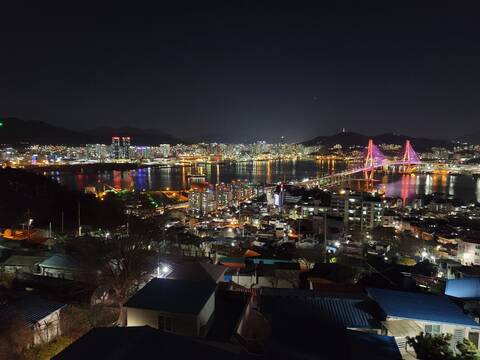
Busan Night Sky View + Jagalchi Seafood Auction Walk
An evening walking tour combining Busan night-cityscape views with Jagalchi-area fish-market auction watching and photo opportunities. The only existing SKU centered on the Jagalchi seafood-auction floor — the closest available proxy for couples wanting an evening seafood-mood Busan experience.
- ·Only inventory SKU centered on Jagalchi night seafood-auction floor
- ·Auction-floor access is genuinely something foreigners can't easily figure out alone
- ·Couples photo moment at Jagalchi-by-night is distinctive
- ·Pairs naturally with a self-walk Jagalchi 2F sashimi dinner before or after
- ·Newly listed — 0/0 reviews at time of writing; flagged honestly
- ·Auction watching is NOT a sit-down sashimi dinner — be clear with your expectations
- ·Auction hours vary by weekly calendar — confirm at booking
- ·Korean-led; the floor itself is visual, narration is minimal
Best for: Couples who want an evening Busan-by-the-water experience and are sashimi-curious without needing the formal sit-down sashimi rooftop dinner that doesn’t exist as a bookable tour (BF4). Foodies who want fish-market-as-culture exposure (BF2). K-content fans who recognize Jagalchi-by-night from Train to Busan’s opening sequence (BF3 atmospheric tie).
English support: Korean-led. Auction watching is largely visual — you’re observing the floor, the bidding, the boxes of fish coming off boats — and the photographer-style format is directional. Frame honestly as “Korean-led; auction floor is visual; minimal narration; you walk away with Busan-fish-market-by-night photographs.”
What you’ll experience: A 2–3 hour evening walk combining Busan night-cityscape stops with Jagalchi-area auction-floor watching and photo opportunities (the product description uses “인생샷” — “photo of a lifetime” — which signals the photographer-walk-tour format). The auction floor at Jagalchi is genuine local culture — wholesalers, vessel arrivals, the rapid-fire bidding sequence — and it’s not something foreign visitors can easily find on their own without a guide who knows the hours and the entry etiquette.
Why it’s #3 despite 0/0 reviews: This is the only available bookable component of the BF4 couple-seafood-evening persona. The keymap’s signature BF4 experience — Jagalchi 2F sashimi rooftop dinner with USD 90–160 couple’s spend — is not bookable, full stop. This pick is the closest available proxy. Frame it honestly: it’s the auction-watching half of a couple’s seafood evening, and you walk up to Jagalchi 2F before or after for the actual sit-down sashimi dinner. We’ll re-validate this listing in October 2026.
Honest cons: 0/0 reviews. This is a photo-walking + auction-observation experience, not a sit-down sashimi dinner — the most common booking mistake for this kind of SKU is expecting a dinner experience and getting a walking experience. Auction calendars vary weekly; confirm at booking. The auction floor itself is genuine but the experience-density is on the lower end of our list.
Check Pick #3 on MyRealTrip
4. Songdo Coastal Walk + Local Restaurant + Photographer
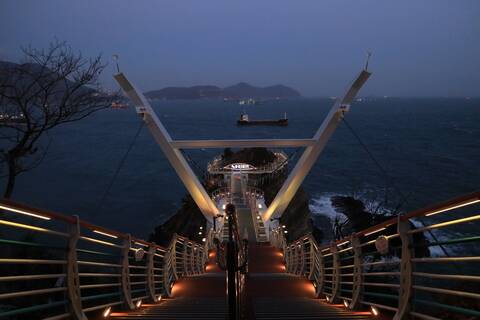
Songdo Skywalk & Local Restaurant Tour with Photographer
A coastal walking trail along Songdo Dulle-gil + photographer-curator-led local restaurant stop + portrait photo moments along the way. The only Busan TOUR SKU in inventory whose product title explicitly contains 맛집 투어 (food tour) — the strongest semantic match in the catalog.
- ·Only Busan TOUR SKU in inventory whose product title explicitly contains 맛집 투어 (food tour)
- ·Songdo coastal walk = Busan's first modern resort beach (1913), less crowded than Haeundae
- ·Photographer-led format means you leave with shareable photos AND a local-restaurant memory in one booking
- ·Strong visual fit for K-content fans (Songdo + cable car + skywalk show up in K-dramas as backdrops)
- ·5.0/1 review — single data point, smallest review pool in our list
- ·Restaurant pick is the photographer's curation, not advertised in advance
- ·Korean-led photographer; restaurant ordering done by host
- ·Half-day commitment (estimated 3–4 hours)
Best for: K-content fans who want a photogenic Busan walk paired with a real local-restaurant lunch picked by someone who lives there (BF3). Couples who want a coastal walk + lunch + photo experience without a full bus-tour day (BF4). Foodies open to a photographer-curator’s restaurant pick they can’t pre-confirm (BF2).
English support: Korean-led photographer. Photo direction is largely visual — “stand here, look here, the light’s good in this corner” — and accessible across languages. The restaurant ordering is done by the photographer-host on your behalf. Frame this as a photo-and-lunch with a Korean-speaking host who handles the menu translation.
What you’ll experience: A 3–4 hour half-day along Songdo Dulle-gil — the seafront walking course connecting Songdo Beach to the Songdo Skywalk and the Songdo Cable Car. Songdo is Busan’s original modern resort beach (Korea’s first, opened 1913) and considerably less crowded than Haeundae. The route includes the Songdo Skywalk (an elevated curving glass-floor structure over the South Sea), a stop at a local restaurant of the photographer’s choosing for lunch, and portrait moments along the way. The photographer shares the photos afterward.
Why this is the BF3-photo-and-food fit despite the single review: Pick #4 is the only SKU in MyRealTrip’s Busan TOUR catalog whose title explicitly says “맛집 투어.” Every other Busan tour has food as an incidental — this one has it as a structural part of the booking. The 5.0/1 caveat is real but the editorial moat (Songdo + photographer + maatjip in one half-day) doesn’t exist in any other product. We’ll re-validate in October 2026.
Honest cons: 5.0/1 is a single data point — review base will grow but it’s small now. Restaurant pick is the photographer’s curation; you can’t pre-confirm specific dish or restaurant. Photographer-led format means experience varies with the photographer assigned.
Check Pick #4 on MyRealTrip
5. Busan Night Snap Tour: Cinematic Photo-Walk with BIFF Square Stop
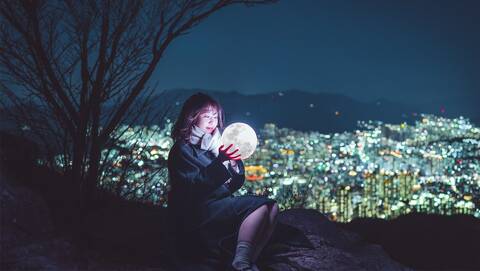
Busan Night Snap Tour: Small-Group Cinematic Photo-Walk (Max 7)
A small-group (max 7) night photo walk with a photographer guide through cinematic Busan spots — Gwangalli, Haeundae, Cinema Center, Nampo-dong. BIFF Square ssiat-hotteok and bibim-dangmyeon stops are typical route additions. Strongest review base of any Busan photo-walk SKU.
- ·4.9/112 reviews — strongest review base of any Busan photo-walk SKU
- ·Max 7 cap is the opposite of the OTA bus-tour format
- ·BIFF Square ssiat-hotteok stop is a standard route addition (confirm at booking)
- ·Closest emotional fit for the Train to Busan / Squid Game S2 / BIFF cinematic mood
- ·Korean-led photographer — minimal narration
- ·Premium per-person price tier (~USD 56)
- ·Outdoor weather dependency
- ·BIFF Square stop is route-standard but not a contractual guarantee
Best for: K-content fans wanting cinematic Busan-by-night without a fake film-locations tour that doesn’t exist anyway (BF3 primary). Couples who want a photographable Busan-by-night moment (BF4). First-timers stretching one extra night in Busan (BF1).
English support: Korean-led photographer. Photo-walks are directional — “stand here, hold this, look at that light” — and largely accessible across languages, but not English-narrated. Frame honestly as a Korean-led shoot with minimal commentary; the photographer directs the photo, you don’t get a guided history of the city.
What you’ll experience: A 2–3 hour night photo walk in a small group capped at 7 people. Routes vary by booking but typically cover some combination of Gwangalli (Gwangan Bridge LED light show backdrop), Haeundae, the Busan Cinema Center area (BIFF / festival hub) and Nampo-dong cinematic spots. The BIFF Square ssiat-hotteok stop is a standard route addition — confirm with the photographer at booking. You leave with shareable photos and a Busan ssiat hotteok bite.
Why this is the K-content emotional anchor: There is no literal Train to Busan filming tour or Squid Game S2 location tour in MyRealTrip’s English Busan inventory — both moats are unfulfilled. What this tour delivers is the mood the films build: bridge lights over water, the Cinema Center’s curved roof, Busan’s signature visual identity at night. For fans who want the cinematic feel without a fake film-locations gimmick, this is the closest emotional fit currently bookable. Importantly for this article, the BIFF Square stop adds the ssiat hotteok layer — the food experience is built into the photo walk.
This is the same SKU as pick #5 in our Busan things-to-do guide, with a re-issued mylink for clean per-page attribution.
Honest cons: KRW 75,000 is the highest per-person price on this list. The Korean-led photographer means the experience is the visual product, not a narrated cultural tour. Heavy rain causes rescheduling. BIFF Square stop is the photographer’s standard addition rather than a contractual guarantee — confirm at booking. And again, this is not a literal K-drama walking tour.
Check Pick #5 on MyRealTrip
6. Mangmi-dong Alley Walk with a Local Curator (Suyeong-gu)
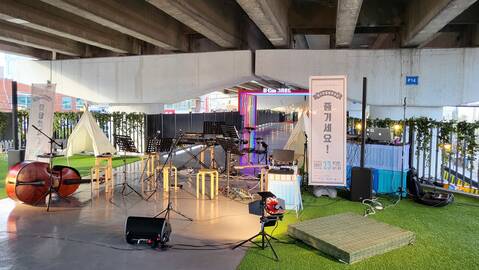
Mangmi-dong Alley Walk: Off-Tourist-Path Busan with a Local Curator
A Suyeong-gu resident curator–led walking tour through Mangmi-dong's residential alleys + small-restaurant scene + neighborhood-history narration. The only Busan SKU in inventory that explicitly serves the off-tourist-path with a local format the foodie connoisseur is asking for.
- ·Only Busan SKU in inventory that explicitly delivers off-tourist-path resident-curator format
- ·Suyeong-gu / Mangmi-dong is the post-2023 K-drama 'real Busan' aesthetic — quiet alleys, not Haeundae
- ·Alley + small-restaurant format means food access without festival-stall theater
- ·Closest match for the BF2 connoisseur 'where Busan natives actually eat' anxiety
- ·5.0/1 review — single data point, smallest review pool
- ·Korean-led local curator; depth-over-polish trade-off
- ·Walking-heavy; not suitable for limited-mobility readers
- ·Single-curator operator — if the curator changes route or stops listing, no easy substitute
Best for: Foodie connoisseurs who already did Jagalchi as the obvious pick and now want the next layer — the alley a Busan native would take a friend to (BF2 primary). K-content fans who recognize Mangmi-dong-style quiet alleys from post-2022 K-drama “real Busan” establishing shots (BF3 atmospheric). First-timers extending Day 2 with one local moment after Day 1’s tourist circuit (BF1).
English support: Korean-led local curator. No explicit English option. Honest framing: “Korean-led narration; the alleys speak for themselves; consider this the BF2 ‘depth’ pick where you’re paying for the curator’s neighborhood familiarity, not for a polished English script.” The keymap’s BF2 anxiety (“Will the tour visit only the famous tourist stalls?”) is exactly what this pick answers; the language anxiety is what it doesn’t.
What you’ll experience: A 2–3 hour resident curator–led walk through Mangmi-dong, a residential neighborhood in Suyeong-gu just inland from Gwangalli Beach. Mangmi-dong has emerged in 2023–2025 as a quiet alternative to the over-photographed Gamcheon — fewer tourists, more day-to-day Busan, alleys, small restaurants, neighborhood cafés, the kind of corner where local residents will recognize the curator. The format is alley walking + small-restaurant or café indoor breaks + neighborhood-history narration.
Why this is the BF2 connoisseur anchor despite a single review: This is the only Busan SKU in MyRealTrip inventory that explicitly serves the off-tourist-path-with-a-local format. Every other Busan tour goes to Gamcheon or Yonggungsa or Haeundae or Jagalchi — the stops that exist because they’re already on the tourist map. Mangmi-dong is the opposite framing: stops that exist because the curator knows the neighborhood. The 5.0/1 review caveat is the trade-off; the editorial moat is real. We’ll re-validate this listing in October 2026.
Honest cons: 5.0/1 is a single data point — review base will grow but it’s small now. Korean-led; the language anxiety is genuine. Walking-heavy with no fixed itinerary. Single-curator-operator structural risk.
Check Pick #6 on MyRealTrip
All six bookable picks at a glance
Below is the side-by-side. Filter by what matters most — rating, price, persona, English support — and read the full section above.
| Tour | Rating / Reviews | Price (KRW + USD) | Duration | Best for | English support |
|---|---|---|---|---|---|
| #1 Sky Capsule + Gamcheon + Jagalchi + Street Food | 0 / 0 (newly listed) | around KRW 77,500 (~USD 58) | Full day | BF1 First-timer / BF3 K-content / BF2 Foodie | Korean-guided |
| #2 Yonggungsa + Gamcheon + Blue Line (bracket with walk-up food) | 4.9 / 240 | around KRW 40,188 (~USD 30) | Full day | BF1 First-timer (workhorse) | Korean-guided |
| #3 Busan Night + Jagalchi Seafood Auction Walk | 0 / 0 (newly listed) | around KRW 48,000 (~USD 36) | 2-3 hr (evening) | BF4 Couple seafood proxy | Korean-led |
| #4 Songdo Coastal + Maatjip + Photographer | 5.0 / 1 | around KRW 50,000 (~USD 38) | Half-day (3-4 hr) | BF3 K-content + food / BF4 Couple | Korean-led |
| #5 Busan Night Snap Tour (max 7) with BIFF stop | 4.9 / 112 | around KRW 75,000 (~USD 56) | 2-3 hr (evening) | BF3 K-content / BF4 Couple | Korean-led |
| #6 Mangmi-dong Alley Walk with Local Curator | 5.0 / 1 | around KRW 70,000 (~USD 53) | 2-3 hr | BF2 Foodie connoisseur | Korean-led |
Two of six are walk-up walking-experiences with newly-listed 0/0 review status; three of six clear the 30+ review floor; one of six clears 100+. The headline: MyRealTrip Busan food-anchored TOUR inventory is genuinely thin. Pick #2 is the social-proof anchor, #5 is the BF3 anchor, and the rest are inventory’s best-available answer to keymap personas.
The Market × Dish × English × Price matrix (the article’s signature)
This is the table the OTAs don’t build. Five rows are walk-up — meaning no MyRealTrip tour bundles them. Each walk-up row is honest about the foreigner experience instead of papering over it.
| Market / Venue | Hero dish | English support | Foreigner price (per person) | Best time | Tour-bookable via MyRealTrip |
|---|---|---|---|---|---|
| Jagalchi 1F (dried seafood + fish stalls) | Walk-through education | Low | Free walk-through; samples vary | 9–11am | Bundled in Pick #1 |
| Jagalchi 2F (sashimi rooftop) | Hoe (raw fish slab) | Low–Medium (English picture menus exist) | USD 35–80 | Dinner | Walk-up only — no tour SKU |
| Bupyeong Kkangtong Market | Night-market street-food crawl | Very Low (no tour SKU, no English staff) | USD 12–20 | 6–10pm | Walk-up only — no tour SKU |
| Gukje Market | General + bibim-dangmyeon | Low | USD 6–10 | Lunch | Walk-up; near Pick #1 route |
| BIFF Square (Nampo-dong) | Ssiat hotteok + bibim-dangmyeon | Low–Medium (filmfest-popular) | USD 4–8 | Anytime | Bundled in Pick #5 (route-standard); walk-up viable any day |
| Seomyeon dwaeji-gukbap alley | Dwaeji-gukbap | Low | USD 7–10 / bowl | Breakfast / lunch | Walk-up only — no tour SKU |
| Busan Station dwaeji-gukbap row | Dwaeji-gukbap (KTX-arrival friendly) | Low–Medium | USD 7–10 / bowl | Anytime | Walk-up viable; some English at counter |
| Gaegeum / Gaya milmyeon halls | Milmyeon | Very Low | USD 6–8 / bowl | Lunch | Walk-up only — no tour SKU |
| Millak Hoe Town (Gwangan Bridge view) | Hoe with bridge view | Low (English picture menus exist at most halls) | USD 60–120 / couple | Sunset / dinner | Walk-up only — no tour SKU |
| Yeongdo seaside (Squid Game S2 area) | Snack stalls + dwaeji | Very Low | USD 5–15 | Daytime | Walk-up only — no tour SKU |
If you want a snippet-friendly version: five of these ten venues have no MyRealTrip tour SKU and require walk-up. This isn’t a failure — it’s how local Busan food infrastructure actually works. The picks above (#1 through #6) cover the bookable segments; the walk-up plan below covers the rest.
Dish explainer: dwaeji-gukbap (돼지국밥)
Pronunciation: roughly twɛ-dʑi-kuk-pap (the 돼 starts with a soft “tw” not a hard “d”; ㅈ between vowels softens to “j-ish”). If you’re wandering an alley and pointing at signs, “dwa-ji-gook-bap” gets you there.
What it is: Boiled pork-bone broth — milky-white from hours of slow extraction — over rice, with sliced pork, condiments offered alongside (chives, salted-shrimp 새우젓, garlic, gochujang, kimchi, kkakdugi 깍두기 cubed-radish kimchi). You season the bowl yourself at the table: a spoonful of salted shrimp for salinity, chives for sharpness, a teaspoon of gochujang stirred in for the Busan-style heat-and-color profile. Some shops serve the broth and rice together, others serve them separately for you to combine — ttaro-gukbap (따로국밥) means “separate.”
Origin: Korean War refugee era, mid-1950s. The dish formalized in Busan’s wartime markets when Northern refugees and locals had access to pork bones from the wartime supply chain but limited beef. The Seomyeon alley row and the Busan Station row are the two highest-density dwaeji-gukbap clusters today; locals have strong opinions about which alley is the original.
What it tastes like vs Seoul cousin: Seoul’s seolleongtang is the closest analog — milky beef-bone broth — but seolleongtang is delicate, almost neutral, and gets its character from the raw scallions and salt you add at the table. Dwaeji-gukbap is heavier, porkier, more aromatic, and the gochujang stir-in pushes the flavor in a direction seolleongtang doesn’t go. If you’ve eaten gomtang or seolleongtang in Seoul, dwaeji-gukbap is what happens when that genre moves south and gets a Busan accent.
Where to walk up: Seomyeon dwaeji-gukbap alley (지하철 서면역 8 or 7번 출구; the alley density runs east of the station) or the Busan Station row (1번 출구 area, easier for KTX-arrival eating). Cash backup is wise; some shops are card-only-Korean.
Price: ~USD 7–10 per bowl. ~USD 1–2 for a side dish if you add one.
Dish explainer: milmyeon (밀면)
Pronunciation: mil-mʲʌn (the 밀 sounds like “meel”; the 면 is “myun” closer to “myeon”). “Meel-myun” gets you there in any Gaegeum or Gaya hall.
What it is: Cold wheat-flour noodles in icy beef-and-radish broth, sometimes served with a hard-boiled egg, slivered cucumber, and a dollop of mustard or vinegar. You can order mul-milmyeon (물밀면, broth version) or bibim-milmyeon (비빔밀면, mixed-with-spicy-sauce version, no broth). Locals typically split a bottle of cold soju between two people and order both styles to share.
Origin: Korean War refugee invention. Pyongyang-style naengmyeon — the dish foreigners often know — uses buckwheat. When buckwheat became unavailable in the Busan refugee economy of the 1950s, cooks substituted wheat flour. The texture is chewier than naengmyeon, the broth slightly sweeter, and the dish has remained Busan-specific in a way naengmyeon never has — Seoul has naengmyeon halls everywhere, but milmyeon halls are rare outside Busan.
What it tastes like vs naengmyeon: Sweeter, chewier, less austere. Naengmyeon at a top Pyongyang-style Seoul hall is almost minimalist — clear cold broth, buckwheat noodle texture, vinegar and mustard on the side. Milmyeon is friendlier on the palate, especially for a foreigner’s first encounter with the cold-noodle genre. If you found naengmyeon too cold or too plain, milmyeon usually wins on the second try.
Where to walk up: Gaegeum (개금) and Gaya (가야) are the two reference districts. The neighborhood halls are walking-distance from the Subway Line 2 stops of the same name. Confirm cash on hand; some small halls don’t take foreign cards.
Price: ~USD 6–8 per bowl.
Dish explainer: hoe (회) — Jagalchi raw fish
Pronunciation: hwe̞ (one syllable, like the English “way” with an h-pause front). “Hweh” gets you there.
What it is: Raw fish slabs by weight. Not Japanese sashimi. The texture, the side dishes, and the eating ritual all differ. Hoe is sliced thicker than Japanese sashimi; the dipping sauce is chogochujang (vinegar-gochujang) or salted sesame oil, not soy + wasabi; and a hoe meal at Jagalchi or Millak Hoe Town comes with side-dish overload — pickled vegetables, raw garlic, gochujang, perilla leaves, a bottle of soju, eventually a pot of fish-bone soup made from your fish’s leftover bones.
How Jagalchi 2F works: Walk into Jagalchi Market on the 1st floor. Pick a tank. Negotiate fish + weight + price (the weight is the cost driver; figure ~USD 35–80 per person depending on fish — flounder, sea bream, halibut, rockfish are common). The vendor cleans the fish. You pay. They direct you upstairs (literally up the stairs at the back of the market) where rooftop hall restaurants are set up by table — you sit, your fish arrives, the side dishes start landing, the soju opens. After the raw course, they take the bones and turn them into maeuntang (매운탕) spicy fish-bone soup. That arrives as the closer.
English support reality: Low-medium. Picture menus exist at most 2F halls. Most vendors will work with you on weight and fish type. Bring a translation app; have your hotel write down “We want hoe for 2 people, around KRW 80,000-120,000 budget” in Korean and show that at a 1F tank.
Price: ~USD 35–80 per person depending on fish + side dishes + soju. Couples typically spend USD 70–160 total at Jagalchi 2F.
Why no tour SKU: We checked. There is currently no Jagalchi 2F sashimi rooftop tour bookable through MyRealTrip’s English storefront. Pick #3 (the night auction walk) is the closest available proxy. The actual sit-down dinner is a walk-up, every time.
Dish explainer: eomuk (어묵) — Busan-origin fish cake
Pronunciation: ʌ-muk. Roughly “uh-mook.”
What it is: Fish cake. Fish ground with starch, formed into sheets or rolls or skewers, fried or steamed, served at markets (skewered with broth dip) or sold in upscale halls (gift-wrapped retail). Busan is the origin. The Samjin Eomuk (삼진어묵) and Goraesa Eomuk (고래사어묵) halls trace to early-20th-century Busan ports, when industrial fish-cake production became a Busan industry. Seoul’s odeng street-cart format is the descendant; the Busan halls are the source.
Where to find it: Any market — Jagalchi 1F, Bupyeong, Gukje, BIFF Square. Samjin Eomuk has flagship hall locations near Yeongdo Bridge that are visit-worthy for the gift-buying angle (vacuum-sealed packs travel well).
Price: ~USD 1.50 per skewer at street stalls; ~USD 5–10 for a small hall sampler.
Dish explainer: ssiat hotteok (씨앗호떡) — BIFF Square seed-pancake
Pronunciation: ɕʰi-at-hʰo-tʰʌk. Roughly “ssi-at hot-tuk.”
What it is: Hotteok — Korean fried sweet pancake with sugar-syrup filling — modified Busan-style. Regular hotteok is a simple sugar-and-cinnamon-filled fried disc. The Busan invention from the BIFF Square street stalls in the 1990s was to slit the cooked hotteok open and stuff sunflower seeds, peanuts, and pumpkin seeds into the molten sugar interior, creating a crackling-textured nutty-sweet bite that doesn’t exist in any other regional Korean food culture. Eat it standing, careful with the molten sugar.
Where to walk up: BIFF Square (Nampo-dong, near Subway Line 1 Jagalchi or Nampo Station). The stalls along the central plaza have done this for decades. The original-claim stall is debated; locals will argue about which one was first.
Price: ~USD 1.50–3 per piece.
Dish explainer: bibim-dangmyeon (비빔당면) — BIFF spicy glass-noodles
Pronunciation: pi-bim-taŋ-mʲʌn. Roughly “bee-beem dahng-myun.”
What it is: Spicy sweet-potato glass noodles, mixed cold in front of you with gochujang, sesame oil, soy, sometimes kimchi, sometimes chopped pickled vegetables. Another BIFF Square street-food invention, served in small bowls at counter stalls. Cold preparation, room-temperature noodles, sweet-spicy-tangy-chewy in one bite. This is the dish that’s hard to find outside Busan and that locals will mention when an out-of-town friend visits.
Where to walk up: BIFF Square stalls, often the same stalls that do the ssiat hotteok. Gukje Market also has counters.
Price: ~USD 3–5 per bowl.
How to eat at Jagalchi Market without Korean — the full walk-up plan
Jagalchi is the article’s most-walked-up venue and the section the OTAs paper over. Here’s the version we’d give a friend.
Getting there: Subway Line 1 to Jagalchi Station, exits 7 or 10. The market is 5 minutes walking. The big modern building with the JAGALCHI sign is the new-style fish hall. The narrower alleys to the south of it are the older 1F market with the live tanks.
1st floor (live tanks + dried seafood):
- Walk through and look. The tanks are the staging area for the upstairs sashimi.
- Many vendors will gesture toward fish — flounder, sea bream, halibut, rockfish, octopus, abalone — and quote weight-based prices on a calculator screen.
- Dried seafood (anchovies, squid, dried fish) is on display along the alleys; mostly takeaway / gift, less for on-site eating.
- Photo etiquette: most stalls don’t mind, some do; ask with a gesture before close-ups of vendors at work.
2nd floor (sashimi rooftop):
- Reachable by stairs at the back of the 1F market. Many stalls have signs pointing up.
- The 2F is a series of small restaurant rooms — your 1F vendor essentially “sells” you to a 2F hall where you’ll eat. The handoff is informal and routine.
- A typical 2-person hoe meal: pick fish on 1F (KRW 80,000–120,000 budget, USD 60–90), 2F seating with side-dish overload, soju (~USD 4–6 a bottle), maeuntang fish-soup closer (often included; sometimes ~USD 5–8 add-on).
- Total spend: USD 70–160 per couple. USD 35–80 per person is the realistic range.
- English support: Picture menus exist. Most halls can communicate weight and price. Translation apps cover the rest.
Worth it?: Yes. This is the single Busan food experience that doesn’t translate north — Seoul has nothing at this scale, and the walk-from-tank-to-table format is genuinely different from a Japanese sashimi restaurant. Even if you don’t normally eat raw fish, the side-dish-and-soju ritual is worth experiencing once.
Walk-up tips for foreigners:
- Cash backup. Some 2F halls are card-only-Korean.
- Lunchtime (12–2pm) and early dinner (5–7pm) are easiest for English-language navigation.
- Bring an empty stomach and 2+ hours.
K-content food self-walk: Train to Busan, Squid Game S2, BIFF
The unaddressed angle in international Busan food coverage. Here’s the honest, no-bookable-tour plan.
Train to Busan (2016). The film’s premise builds around the KTX route from Seoul to Busan — the literal “filming location” most fans want is the route plus the arrival platform at Busan Station. KTX in, walk the Busan Station platforms on arrival, then break for dwaeji-gukbap at one of the row stalls outside Exit 1 of Busan Station. That is, structurally, the food layer of the film.
Squid Game S2 (2024–2025). Filmed extensively in Saha-gu and Yeongdo. Yeongdo Bridge is walkable (Subway Line 1 to Nampo, walk to the bridge). The Yeongdo industrial waterfront is recognizable from establishing shots. For a food layer, the Yeongdo seaside snack stalls along Huinnyeoul Cultural Village’s coastline (the cinematic seafront in many of the show’s exteriors) work — small dwaeji-gukbap shops, eomuk vendors, picture-menu coffee carts. Self-walk is the only option; no tour bundles this.
BIFF Square and Busan Cinema Center. The literal heart of Korean film culture. BIFF Square (Nampo-dong) is where the festival’s screenings happened historically; handprints of festival-honored directors line the pavement, and the ssiat-hotteok and bibim-dangmyeon stalls (see explainers above) are concentrated here. Pick #5 (the night snap tour) typically routes through BIFF Square as a standard stop and adds a ssiat-hotteok stop — that’s the closest bookable approximation to a literal film-locations + food crawl. The Cinema Center in Centum City is the architectural showpiece, walkable independently.
The takeaway: Busan’s K-content food moat is real. The bookable tour layer hasn’t caught up. The DIY plan above plus Pick #5 delivers what most fans actually want.
Practical tips for foreign food travelers in Busan
English support is real but thinner than Seoul. Hotel front desks in Haeundae and central Busan have English staff. Jagalchi 2F has picture menus. BIFF Square stalls have decades of foreign-tourist traffic and basic English numbers. Seomyeon dwaeji-gukbap alleys, Gaegeum/Gaya milmyeon halls, and Bupyeong Kkangtong have very low English support — translation apps are essential.
Cash and cards. Visa, Mastercard, and Amex work at hotels, MyRealTrip bookings, the airport, larger Haeundae and central restaurants. Smaller alley stalls and traditional markets often prefer cash. Carry KRW 50,000–100,000 in cash for walk-up days.
Subway is your friend. Busan Metro covers most food destinations: Line 1 hits Jagalchi, Nampo (BIFF Square), Busan Station, Seomyeon. Line 2 hits Gaegeum, Gaya, Gwangan (for Millak Hoe Town walk), Suyeong (for Mangmi-dong / Pick #6). T-money cards work on metro and bus.
Best months for food walking. April–June and September–November. July–August is hot and humid; outdoor walking is uncomfortable. Late August–September is typhoon-track; rainy days happen. December–February is cold but the markets all stay open.
Vegetarian and halal honesty. Most Busan signature dishes are pork-, beef-, or seafood-based. Strict vegetarians have a much harder time in Busan than in Seoul; vegan is harder still. Halal-certified options are concentrated in the Itaewon-equivalent international districts of Haeundae but very rare in Jagalchi or BIFF Square. If your party has dietary needs, see the FAQ below.
Stroller and mobility considerations. Gamcheon and Mangmi-dong both have steep alley segments. Jagalchi 2F is reached by stairs from 1F. BIFF Square is flat. Subway access generally has elevators but not always at every exit. Plan accordingly.
Day-trip from Seoul food viability. KTX from Seoul Station to Busan Station is 2h 40m. A day trip is technically possible but you’ll burn 5+ hours of round-trip rail. The honest answer: don’t try it as a same-day food trip — book one night minimum. See FAQ.
Wider Busan and Seoul context
If you’re stacking Seoul and Busan in the same Korea trip, the food architecture should look something like this: Seoul gets BBQ, chicken-and-beer, Gwangjang, the kimchi or makgeolli class, the cooking classes — see the Seoul food-tour guide. Busan gets the walk-up regional dishes (dwaeji-gukbap, milmyeon, hoe at Jagalchi, ssiat hotteok at BIFF, eomuk at any market) and one of the picks above. If you’re traveling with kids, the rules change — see Busan with kids for the family-tested picks. And the broader Busan frame is in things to do in Busan 2026 if you’re still deciding whether the side trip is worth it.
FAQ
Are Busan food tours available in English?
Most aren't, honestly. None of the six picks in this article are sold as English-narrated food tours — they're Korean-language products where the visual experience translates, the platform handles English checkout, and travelers manage on-tour with translation apps. This is the real state of MyRealTrip's Busan food inventory and it's thinner than Seoul's. The picks above all work for English-speakers because the experiences themselves are visual or directional: Jagalchi market walking, photographer-led night walks, alley walks where the alleys speak for themselves. If you require fully English-narrated small-group food tours, Seoul has more inventory.
Is Jagalchi Market a tourist trap?
It's both touristed and genuinely local — it's the largest fish market in Korea, the wholesale center for Busan's fishing industry, and a tourist photo destination at the same time. The 1st floor is more touristed (dried seafood, retail-friendly stalls). The 2nd floor sashimi halls are genuinely where Busan locals also eat — you'll see Korean families and office groups upstairs alongside foreign visitors. The trick is to avoid the most photo-targeted retail stalls on 1F and to walk straight up to 2F for the actual eating. It's not a trap; it's a working market.
What's the difference between dwaeji-gukbap and seolleongtang?
Dwaeji-gukbap is the Busan pork-bone soup — boiled pork-bone broth, sliced pork, rice in the same bowl, condiments to season at the table (chives, salted shrimp, gochujang stir-in). Seolleongtang is the Seoul beef-bone soup — milky beef-bone broth, brisket slices, rice on the side, salt and scallions to season. Same broth-genre, different protein, different region, and dwaeji-gukbap pushes flavor harder with the gochujang stir-in option. If you've had seolleongtang in Seoul, dwaeji-gukbap in Busan is the comparable next dish — and locals consider it the regional answer.
Is milmyeon better than naengmyeon?
Different dishes, not better-or-worse. Pyongyang-style naengmyeon (which Seoul does best) is austere — clear cold broth, buckwheat-noodle texture, vinegar and mustard on the side, almost minimalist. Milmyeon is sweeter and chewier — wheat-flour noodles, slightly sweet broth, friendlier on the first bite. Foreigners trying naengmyeon for the first time often find it too cold or too plain; milmyeon usually wins second-try. Both are summer dishes; both are best at neighborhood halls (Gaegeum or Gaya for milmyeon in Busan).
How does Jagalchi 2F sashimi actually work?
Walk into the 1st floor of Jagalchi Market. Pick a tank. The vendor will quote a weight-based price on a calculator (~USD 35–80 per person for couples is the realistic range). Pay. The vendor cleans the fish. They direct you upstairs to a hall on the 2nd floor — it's a routine handoff. You sit, the fish arrives sliced, side dishes land, soju opens. After the raw course, the bones go into a maeuntang (spicy fish-bone soup) that arrives as the closer. Picture menus exist on 2F. Cash backup is wise. Total spend USD 70–160 per couple. There is currently no MyRealTrip tour that bundles this — it's walk-up only.
Are there vegetarian or halal options on these tours?
Limited honestly. Most signature Busan dishes are pork-, beef-, or seafood-based — dwaeji-gukbap is pork, milmyeon broth is typically beef-and-radish, hoe is raw fish, eomuk is fish, ssiat hotteok is vegetarian, bibim-dangmyeon can be made without anchovy. Vegetarians have a harder time in Busan than Seoul; halal even more so. Pick #6 (Mangmi-dong alley walk) is the most flexible because the curator can route to small cafés and non-meat-anchored neighborhood spots. For halal-specific, ask MyRealTrip support before booking; alternatively, Haeundae has a small cluster of halal-certified restaurants visitable independently.
Can I do a Busan food tour as a day trip from Seoul?
Technically yes, practically no. KTX Seoul to Busan is 2h 40m one way; a same-day round trip costs 5+ hours of rail plus the activity time. By the time you arrive in Busan you have maybe 4–6 hours before you need to head back, which is just enough for a Pick #2-style day or a walk-up dwaeji-gukbap + Jagalchi lunch — but you won't have time for the night experiences (#3, #5) or a leisurely sit-down dinner. The honest recommendation: book one night minimum in Busan. Two nights is the sweet spot. If you absolutely must same-day, prioritize Pick #2 (cheapest, most efficient) plus walk-up Jagalchi 2F lunch.
How safe is Busan sashimi for foreigners?
Standard food-safety reality: sashimi-grade raw fish at a fish market with high turnover is generally safe. Jagalchi has the volume and the cold-chain to make this work. Pregnant travelers and immune-compromised travelers should avoid raw fish anywhere, Busan or otherwise — Pick #1 (street-food sampling) and the walk-up Jagalchi 2F can be ordered cooked at most halls (steamed or grilled fish instead of hoe). If you have shellfish allergies, be explicit at booking; cross-contamination risk exists at any Korean market. The base case is safe; the personal-medical case requires the usual care.
Does Busan have a Train to Busan or Squid Game S2 food tour?
Not currently — neither has a bookable English food-tour SKU in MyRealTrip's Busan inventory. Train to Busan's defining location is the KTX route plus Busan Station arrival; the food layer is dwaeji-gukbap at the row stalls outside Busan Station Exit 1. Squid Game S2 filmed in Saha-gu and Yeongdo; the food layer is Yeongdo seaside snack stalls along Huinnyeoul. Both are self-walk. Pick #5 (night snap tour) is the closest bookable atmospheric proxy — it routes through BIFF Square and the Cinema Center, adds a ssiat-hotteok stop, and captures the cinematic Busan-noir mood without claiming to be a film-locations tour.
When is the worst time of year to do a Busan food tour?
Late August through mid-September. Typhoon-track season — outdoor and night walking experiences (#3, #5) cancel for weather, sometimes day-of, and walking the markets in heavy rain is unpleasant. Mid-July to mid-August is hot and humid (35°C+ days), which makes the indoor dwaeji-gukbap and milmyeon halls great but the BIFF Square outdoor walking less great. The best months are April–June and September–November. December–February is cold but the markets all stay open and Jagalchi 2F sashimi halls are heated.
Wrap-up — what to read next
This article is the food-only deep-dive of the Busan EN cluster. Other articles to stack with it:
- Busan things-to-do 2026 — the broader Busan side-trip guide. Covers KTX-from-Seoul logistics, beach culture, K-content angle, the things you do when you’re not eating.
- Busan with kids 2026 — the family-tested picks. If your teens are foodies, the Jagalchi + street food day (Pick #1 above) and the BIFF Square ssiat-hotteok walk (Pick #5) both work for ages 8+.
- Best Korean food tours in Seoul 2026 — the Seoul leg of the same Korea trip. BBQ, kimchi class, Gwangjang. Stack one of each city’s food-tour articles for the full Korea food picture.
If you came here mid-trip-planning, lock the KTX dates first — those drive the Busan food itinerary. Pick one of the six bookable tours above, build the walk-up dishes around it (dwaeji-gukbap morning, ssiat hotteok afternoon, Jagalchi 2F dinner is the highest-density single-day Busan food frame we’ve found), and budget USD 110–180 per person for a day-and-a-half of Busan-specific food experiences inclusive of the booking and the walk-up dishes.
Prices and availability are subject to change; confirm everything on MyRealTrip’s product pages before you commit. We’ll keep adding Busan food picks here as English-friendly inventory grows — particularly the moment a Jagalchi 2F sashimi rooftop SKU, a Millak Hoe Town SKU, or a dedicated dwaeji-gukbap walking-tour SKU lands.