Things to Do in Busan: 7 Honest Picks for 2026 Travelers
From Haeundae yacht sunsets to Sky Capsule rides and Train to Busan film spots — 7 honest things to do in Busan for 2026, bookable in English.
Already booked Seoul? Busan is Korea’s coastal city — a 2.5-hour KTX ride south, with beaches, a hilltop rainbow village, and a film-cult identity Seoul doesn’t have.
TL;DR — Pick the experience that matches your traveler type
Busan is not a smaller Seoul. It’s a separate city with its own dialect, a real beach culture, and an outsized place in Korean cinema history. Most travelers add it as a 1-2 night side leg from Seoul. Below are five common traveler types and the pick we’d start with for each.
| Traveler type | First-pick experience | Why it works |
|---|---|---|
| First-time Seoul-extension visitor | #1 Yonggungsa + Gamcheon + Blue Line Park | Three iconic Busan landmarks in one booking, no rental car required. |
| K-content fan (Train to Busan / Squid Game S2) | #5 Busan Night Snap Tour + self-walk spots | Cinematic Busan-noir mood plus self-walk for actual film locations. |
| Beach + nightlife couple | #3 Haeundae Yacht + #5 Night Snap Tour | Sunset under Gwangan Bridge, then a small-group photo walk. |
| Foodie | (limited inventory — see disclosure below) | Self-walk Jagalchi 2F + Bupyeong night market until a tour lands. |
| Family with kids 7+ | #1 Yonggungsa combo + #4 Gwangalli SUP | Wider geography plus calm-bay paddleboard. |
Across the seven picks, the average MyRealTrip rating sits at 4.84 (May 2026). Prices and availability are subject to change — confirm everything on the booking page before you commit.
Is Busan worth the side trip from Seoul?
Honest answer: yes if you have at least one full night, no if you’re trying to pack it into the same day as a Seoul activity. Busan is the country’s second-largest city, with the largest fish market in Korea, a cult film tradition (BIFF and a long list of zombie-movie shoots), and beaches Seoul doesn’t have.
The travelers who get the most from Busan: first-time visitors with 7+ days who want one non-Seoul leg, K-content fans who feel cheated leaving Korea without standing in Train to Busan country, and beach-and-nightlife couples on a romance leg. If none of those describe your trip, your time is probably better spent extending Seoul or comparing the Jeju side leg, which competes with Busan for the same itinerary slot.
From Seoul to Busan — KTX vs flight
The single biggest gating question for inbound travelers is how to get there. Almost every other guide hand-waves this; here’s the version we’d give a friend.
| Mode | Time door-to-door | Approx. cost | Why pick it |
|---|---|---|---|
| KTX (recommended) | ~2.5 hours (2h 40m on the train) | KRW 50,000-60,000 each way (~USD 38-45) | Cheaper, more flexible, drops you in central Busan a 10-minute taxi from Haeundae. Trains every 20-30 minutes daytime. |
| Flight (Gimpo-Gimhae) | ~2.5 hours total (1h flight + ~1.5h airport time) | KRW 60,000-150,000 each way (~USD 45-115) | Same total time, more expensive, more hassle. Worth it only if you’re near GMP and have a Gimhae-side hotel. |
The KTX wins for almost every English-speaking first-timer. Buy at Korail’s English site or via a third-party rail aggregator; the QR code on your phone works at the gate. The Train to Busan opening sequence is set on this exact route — arriving by KTX is, in a small literal way, walking into the movie.
An honest inventory disclosure — read this before the picks
Most “best of Busan” articles on international OTAs pad to 12 attractions and quietly skip the question of whether anything is bookable in English. We’re going to be upfront, because the picks below only make sense in this context.
MyRealTrip’s Busan inventory is materially thinner than Seoul or Jeju. It’s the second-largest city in Korea but the third-largest English-bookable activity supply on the platform. Three specific gaps matter:
- No dedicated Train to Busan / Squid Game S2 / BIFF film-locations tour. Squid Game S2 filmed extensively in Saha-gu and Yeongdo, Train to Busan’s title sequence is built around the KTX-Busan Station arrival, and BIFF Square is the heart of Korean film tourism — none of that is currently sold as an English-friendly bookable tour. We address this in the K-content callout box with a self-walk plan.
- No Jagalchi food tour with a meaningful review base. Korea’s largest fish market is the foodie keyword anchor, but no English food-tour SKU surfaced with 20+ reviews. We address this in practical tips with a self-walk approach.
- No kids-explicit Busan tour cleared the cutoff. Two products tagged for families had 0 reviews, which we don’t surface. Families get a soft fit through wider-coverage city combos (#1, #2) and the calm-bay paddleboard (#4).
Zero of the seven picks are sold as English-narrated experiences. This is honest to inventory. The MyRealTrip platform supports English checkout and foreign-card payment — that’s the genuine English layer. On-tour, expect Korean commentary with translation-app handouts. The picks below all work for English-speakers because the experiences themselves are visual: a yacht under a bridge, a paddleboard on a calm bay, a coastal cliff temple, a Sky Capsule cabin, a surf lesson by demonstration. We tag English-support reality on every pick honestly.
If you specifically need a fully English-narrated small-group experience, Seoul has more inventory — see the Seoul main article. We’ll keep adding Busan picks here as English-explicit listings grow.
How we picked these seven
The rule on this site is rating cutoff plus persona coverage plus inventory honesty. For Busan we relaxed the review-count floor because the English review corpus is genuinely smaller than Seoul’s.
- Rating cutoff: 4.5+ on MyRealTrip. The seven that made it average 4.84.
- Review-count floor: 20+ reviews where possible. Five of seven clear it; two (#2 Taejongdae combo at 23, #7 Sky Capsule combo at 10) are flagged honestly because they uniquely fill gaps.
- Persona coverage: at least one strong pick for first-timers, K-content fans (partial — see disclosure), couples, and active travelers. Foodie and explicit-kids picks are inventory-gapped, not omitted by choice.
- Activity-type spread: 2 city tours, 1 yacht, 2 water sports, 1 night photo walk, 1 Sky Capsule combo. Beach culture is Busan’s biggest differentiator vs Seoul and Jeju.
- Local-operator moat: every pick is small-group, locally-led on MyRealTrip’s Korean partner inventory. Klook, Viator, and GetYourGuide resell the same handful of large-bus operators; the picks below are the smaller choices the OTAs miss.
Data source: MyRealTrip public ratings and review counts as of early May 2026. We earn a commission on bookings made through our links, but we excluded any product that didn’t clear the rating threshold regardless of payout. USD figures are rough conversions at ~1,330 won to the dollar; treat both KRW and USD as planning anchors, not quotes.
1. Haedong Yonggungsa, Gamcheon Culture Village & Blue Line Park: The Busan Big Three
![[부산] 해동용궁사 + 감천문화마을 + 블루라인파크 가이드 투어](https://dry7pvlp22cox.cloudfront.net/mrt-images-prod/2026/03/30/NHOH/k1aaEGgQxp.jpg?width=480&quality=70)
[부산] 해동용궁사 + 감천문화마을 + 블루라인파크 가이드 투어
A full-day guided tour combining a coastal Buddhist temple, the rainbow hillside village, and the Blue Line coastal park where Busan's Sky Capsule runs. The single most-reviewed Busan-only city tour in MyRealTrip's inventory.
- ·Three iconic Busan landmarks in one booking — solves the no-rental-car problem
- ·4.9 average across 240+ reviews — strongest social proof in our Busan shortlist
- ·Coastal temple visually unlike any other Korean Buddhist site
- ·Foreign-card checkout via MyRealTrip
- ·Korean-narrated commentary — the visual circuit is the highlight
- ·Gamcheon's hill segment is steep — not stroller-friendly
- ·Full-day commits ~8-10 hours of your trip
Best for: First-time Seoul-extension visitors who didn’t rent a car, families with kids 7+ who can manage Gamcheon’s hill segment, and K-content fans who recognize Yonggungsa from various sageuk drama temple scenes.
English support: Korean-guided. The visual circuit is the experience — signage at all three locations is bilingual, and English-language audio apps cover Yonggungsa’s Buddhist context. Frame this as a scenic-day-out with a Korean-speaking driver who handles the logistics, not an English-narrated cultural tour.
What you’ll experience: A full-day bus circuit hitting three of Busan’s most-photographed landmarks. Haedong Yonggungsa is a coastal Buddhist temple on the city’s eastern edge — 14th-century origins, perched directly on the rocks above the South Sea. Most Korean Buddhist temples are mountain-bound; this one watches the ocean. Gamcheon Culture Village is the rainbow-painted hillside neighborhood in Saha-gu that became a pilgrimage spot when the city repainted the houses as an arts project. Blue Line Park is the former coastal-rail line east of Haeundae, converted into a scenic walking path with the option to ride the suspended Sky Capsule (separate ticket) along the coast.
Why it’s the lead: This is the most-reviewed Busan-only city tour on MyRealTrip’s English storefront — close to 250 reviews at 4.9. For first-time travelers extending a Seoul trip with a single Busan day, doing all three sites independently means navigating three bus routes in a city where signage thins out fast outside Haeundae. Booking this clears that. Yonggungsa appears in multiple sageuk dramas as a temple set, and Gamcheon featured in Reply 1997 — atmospheric ties rather than scripted-scene stops, but K-drama fans will recognize the visual language.
Honest cons: Gamcheon Culture Village is built on a hill — Busan is genuinely hilly compared to Seoul’s grid. Strollers struggle. Travelers with mobility limits should expect elevation walks rather than flat circuits. Pickup and start times shift with the booking calendar; confirm before paying.
2. Taejongdae, Songdo Skywalk, Gamcheon & Yonggungsa: The Full-Day Coastal Loop
![[부산] 태종대 · 감천문화마을 · 송도 스카이워크 · 해동용궁사 당일 투어 (부산 출발)](https://dry7pvlp22cox.cloudfront.net/mrt-images-prod/2024/11/25/Zzrc/DyfDDhhQdA.jpg?width=480&quality=70)
[부산] 태종대 · 감천문화마을 · 송도 스카이워크 · 해동용궁사 당일 투어 (부산 출발)
The wider-coverage version of #1 — adds Taejongdae's clifftop park on Yeongdo and the Songdo elevated skywalk for travelers who want maximum geography in one day.
- ·Adds Taejongdae and Songdo Skywalk — Busan's most photogenic outer-coast spots
- ·Single-booking solution for travelers doing only one Busan day
- ·Yeongdo Bridge area connects to Squid Game S2 atmospheric territory
- ·23 reviews — smaller sample than #1 (flagged honestly)
- ·Long bus day with significant transfer time
- ·Korean-narrated
Best for: Seoul-extension travelers doing a true 1-day Busan trip who want maximum coverage, K-content fans who want to see Taejongdae and the Yeongdo bridge area, and active travelers who don’t mind a long day on the bus.
English support: Korean-narrated. Same caveat as #1 — the views are the narrative, the driver handles logistics, English-language travelers manage with translation apps and the visual experience.
What you’ll experience: The deeper-coverage Busan day. In addition to Gamcheon and Yonggungsa from #1, this adds Taejongdae — Yeongdo Island’s southern clifftop park with sea views, a lighthouse, and a forested 4-kilometer perimeter walk — and Songdo Skywalk, the elevated glass-floored walkway over the South Sea on Busan’s western coast. Yeongdo is also where Squid Game S2 filmed several of its Busan sequences; the bridge approaches and industrial waterfront are recognizable from the bus ride if you know what you’re looking at.
Why #2 rather than the lead: The review base is 23 — solid for a smaller sample but not the rock-solid 240 of #1. This is also a wider-coverage day with longer transit windows. Travelers who want depth at fewer sites should pick #1; travelers who specifically want Taejongdae and Songdo in the same day should pick this. The 4.7 average suggests the operator delivers consistently; the smaller review base is what we’re flagging. Taejongdae’s coastal cliffs echo Train to Busan’s establishing shots — atmosphere, not a literal location stop.
Honest cons: 23 reviews is the biggest caveat — we surfaced this product because the Taejongdae + Songdo + core combo coverage doesn’t exist elsewhere in inventory. Treat as “established route with growing review base.” The walking demand at Taejongdae (4 km perimeter) is higher than at #1; comfortable shoes mandatory.
3. Haeundae Yacht Tour: Sunset Sail Past Gwangan Bridge
![[부산] 요트포유 부산 요트투어 해운대 (퍼블릭/프라이빗)](https://dry7pvlp22cox.cloudfront.net/mrt-images-prod/2024/11/25/NaXH/8OU0N9SCDi.jpg?width=480&quality=70)
[부산] 요트포유 부산 요트투어 해운대 (퍼블릭/프라이빗)
A 1.5-hour yacht sail from Haeundae Marina across the cove and under Gwangan Bridge, with sunset and night-light departures available. The single most-reviewed Busan activity in MyRealTrip's inventory at 472+ reviews.
- ·Highest review count of any Busan activity on MyRealTrip (472+)
- ·Both public-group and private-charter tiers available
- ·Sunset and night-of-bridge-lights timing options
- ·Iconic Busan couple's photo from the water
- ·Korean-led on board — sail is mostly visual
- ·Bay-only sail (calm water, not open-sea)
- ·Weather-cancellable — operator refunds for sea-condition cancellations
- ·Base price is per-person basic-tier; private upgrades materially more
Best for: Couples on a romance leg, first-time Seoul-extension visitors who want one signature Busan moment, and families with kids 7+ on a calm-bay sail.
English support: Korean-led on board. The sail itself is largely visual — the bay views and the bridge light show are the narration. Foreign-card checkout via MyRealTrip’s platform is supported. Frame this as a sail with a Korean-speaking crew, not a guided tour.
What you’ll experience: A 1.5-hour group yacht sail from Haeundae Marina across the cove and under Gwangan Bridge. Departures vary — daytime sails show off the beach city in clear light, sunset sails catch the bridge’s silhouette, and night sails coincide with Gwangan Bridge’s nightly LED light show. The yacht itself is a midsize multi-deck vessel; public sails seat several dozen, private charters bring the group down to a single party.
Why it earns the couples slot: Gwangan Bridge appears in the opening sequence of Train to Busan and in countless K-drama sunset shots — the visual carries the experience for couples who’ve half-watched a hundred Korean shows. The night-of-the-light-show timing is genuinely photogenic in a way that’s hard to manufacture from shore, and the option to upgrade to a private charter changes the experience from “yacht tour” to “private sail” without changing the operator.
Honest cons: The base price is per-person basic-tier; private and sunset-premium tiers are materially more expensive, and the realistic couples-romance booking lands in the mid-tier bracket. This is bay-only sailing — Haeundae’s cove is calm and the route short, which means it’s accessible but not a thrill-seeking sail. Weather cancellation is real; operators refund, but day-of changes happen.
4. SUP Paddleboard at Gwangalli Beach
![[부산] 패들보드 크레이지서퍼스와 함께하는 SUP(패들보드) 체험 광안리(1인)](https://dry7pvlp22cox.cloudfront.net/mrt-images-prod/2024/11/27/KqWR/HiplD80Rf6.jpg?width=480&quality=70)
[부산] 패들보드 크레이지서퍼스와 함께하는 SUP(패들보드) 체험 광안리(1인)
A 1.5-2 hour stand-up paddleboard session on Gwangalli's calm bay, with the same Gwangan Bridge backdrop as the yacht tour but at water level. Perfect 5.0 rating across 200 reviews.
- ·5.0 rating across 200 reviews — perfect score, robust sample
- ·Calm Gwangalli bay is genuinely beginner-friendly
- ·Gwangan Bridge backdrop at a tenth the cost of the yacht
- ·Active alternative for couples and families who'd rather move than sit
- ·Korean-led basic instruction — confirm English at booking if it matters
- ·Best April-October — winter operations limited
- ·Wave conditions vary; calm-bay default but not guaranteed glass-flat
Best for: Active couples, families with kids 8+, first-time visitors looking for one differentiated Busan experience that won’t blow the budget, and travelers who’d rather move than sit on a yacht.
English support: Korean-led basic instruction. SUP shops at Gwangalli regularly host international paddlers, and surf-shop instruction is largely physical demonstration — paddle stance, balance, the basic forward stroke. Confirm English-language instruction at booking if it’s non-negotiable; in practice, most travelers manage with the demo-based teaching style.
What you’ll experience: A 1.5-2 hour session on Gwangalli Beach, Busan’s bay-side beach immediately west of Haeundae, with Gwangan Bridge as the constant horizon. The lesson begins on the sand with paddle and balance basics, then moves to the water. Gwangalli’s bay is naturally calm — one of the better learn-to-paddleboard locations in Korea. The Gwangan Bridge view from a paddleboard at sunset is the same shot you’d get from a yacht (#3), at a fraction of the cost, with the participatory layer of actually paddling for it.
Why the perfect score holds up: 5.0 across 200 reviews is the strongest rating-to-sample ratio in our Busan shortlist. The feedback pattern is consistent — small group, beginner-friendly, calm bay, the bridge backdrop, friendly instructors. The 200-review base is robust enough that this isn’t a sample-size artifact. They share the bridge backdrop with the yacht (#3), but the yacht is sit-and-look while the paddleboard is do-and-photograph; couples often book both, mornings and evenings.
Honest cons: The KRW 10,000 base is the per-person basic entry; full sessions with lessons and gear typically land KRW 30,000-60,000 (~USD 22-45). Best window is April through October — winter schedules contract and water gets cold by November. Wave conditions are usually calm but not always; offshore typhoons may flip the day to flat-water drills.
5. Busan Night Snap Tour: A Cinematic Photo-Walk Through the City
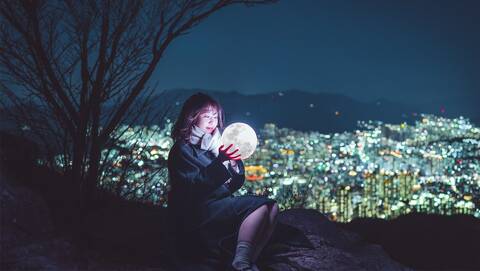
부산 야경 소규모 스냅투어 혼자서도 즐길 수 있는 스냅 (최대 7명)
A small-group (max 7) night photo walk with a photographer guide through Gwangalli, Haeundae, and the Cinema Center area — captures Busan's signature cinematic mood. The closest emotional fit for K-content fans in current inventory.
- ·Small group (max 7) — opposite of the OTA bus-tour format
- ·You leave with shareable photos taken by a photographer
- ·Captures Busan's signature cinematic visual identity
- ·Closest atmospheric proxy for Train to Busan / Squid Game S2 mood
- ·Korean-led photographer — minimal narration
- ·Premium per-person price tier
- ·Outdoor weather dependency
- ·Not a literal K-drama filming-spot tour (no such tour exists in inventory)
Best for: Couples wanting a photographable night-Busan moment, K-content fans looking for the cinematic Busan-noir mood without a fake film-tour, and solo first-timers stretching one extra night in Busan.
English support: Korean-led photographer. Photo-walking tours are largely directional — “stand here, look here, hold this pose” — and accessible across languages, but not English-narrated. Frame honestly as a Korean-led shoot with minimal commentary; the photographer directs the photo, you don’t get a guided history of the city.
What you’ll experience: A small-group (max seven) night photo walk lasting 2-3 hours through some combination of Gwangalli, Haeundae, and the Busan Cinema Center area. The format is unusual — the photographer leads, sets up the shot, directs the framing, and shares the photos afterward. It’s part walking tour, part shoot, part atmospheric tour-by-photo. Busan at night has a specific visual identity — bridge lights over water, neon on the elevated roads, the Cinema Center’s curved roof — and a photographer-led walk is one of the better ways to experience it as a foreign visitor.
Why it doubles as our K-content fan pick: There is no literal Train to Busan filming tour in MyRealTrip’s English Busan inventory, and no Squid Game S2 location tour either — both moats are unfulfilled. What this tour delivers is the mood the films built: the bridge lights, the cinematic Busan night, the visual language Korean directors come to Busan to shoot in. For fans of the cinematic Busan visual identity, this is the closest emotional fit currently bookable. For literal filming-spot pilgrimages, see the K-content callout below.
Honest cons: KRW 75,000 is the highest per-person price on our Busan list. The Korean-led photographer means the experience is the visual product, not a substantive guided cultural tour. Heavy rain causes rescheduling. And again, this is not a literal K-drama walking tour — setting expectations honestly is the difference between a 5-star and a 3-star review.
Self-walk K-content callout: Train to Busan, Squid Game S2, BIFF
This is the section the OTAs skip. For the K-content fan persona — the dominant unaddressed angle in international Busan coverage — here’s the honest, no-bookable-tour plan we’d give a friend.
Train to Busan (2016). The film’s premise is built around a KTX route from Seoul to Busan during a zombie outbreak — the literal “filming location” most fans want to see is the route itself, plus the arrival platform at Busan Station. Take the train down, walk the Busan Station platforms on arrival, and explore the elevated road network and Choryang neighborhood (15-20 minutes from the concourse) that establish the climax shots. There is no current English-bookable tour for this; the self-walk version costs the price of a KTX ticket plus your time.
Squid Game S2 (2024-2025). Filmed extensively in Busan, especially around Saha-gu and Yeongdo. The Yeongdo Bridge approaches and the industrial Yeongdo waterfront are the most recognizable on-screen locations; the bridge is walkable. Saha-gu’s filming spots are scattered across residential neighborhoods that haven’t been officially marketed as visitable — respect that residents live there. The honest plan: walk Yeongdo Bridge in the late afternoon, head to Taejongdae for the cliff views (#2 covers this), and you’ve seen the territory. We’ll add a dedicated Busan film-locations cluster page when bookable inventory lands.
BIFF Square (Nampodong) and Busan Cinema Center (Centum City). Both visitable independently, year-round, with bilingual signage. BIFF Square is the literal heart of Korean film culture — handprints of festival-honored directors line the pavement, and during the Busan International Film Festival (early-mid October) the area becomes the festival’s screening hub. The Cinema Center is the architectural showpiece, a cantilevered roof structure hosting year-round screenings. Both are self-walk visits; neither requires a tour.
The takeaway: Busan’s K-content moat is real, but the bookable English tour layer hasn’t caught up. The DIY plan above delivers what most fans actually want.
6. Songjeong Beach Surf Lessons
![[부산/송정] 서프로드 서핑 강습](https://dry7pvlp22cox.cloudfront.net/mrt-images-prod/2024/11/04/ntMT/D3xKCATJq3.jpg?width=480&quality=70)
[부산/송정] 서프로드 서핑 강습
A 2-hour beginner surf lesson with board rental at Songjeong Beach — Korea's most established surf beach (with Yangyang). Established surf shop, strong reviews, international clientele.
- ·Songjeong is the right surf spot in Busan — consistent waves, established break
- ·Established surf shop with international clientele
- ·Beginner-welcome — no prior experience needed
- ·Real beach-and-board experience genuinely differentiates Busan from Seoul
- ·28 reviews — smaller sample (flagged honestly)
- ·Best April-October — winter operations limited
- ·Korean-led basic instruction — confirm English at booking
- ·Wave conditions vary day-to-day
Best for: Active travelers in their 20s-40s, K-content fans who recognized Songjeong from variety shows, and Korea-resident expats on a long weekend who want a beach-culture experience that genuinely doesn’t exist in Seoul.
English support: Korean-led basic instruction. Songjeong has hosted international surfers for years — basic surf English (paddle, pop-up, balance) is commonly available, and surfing instruction is largely visual demonstration regardless of language. Confirm English at booking if you want full English coaching; in practice, most foreign surfers manage with the demo-based teaching style.
What you’ll experience: A 2-hour beginner surf lesson at Songjeong Beach, just east of Haeundae. Format is roughly 20-30 minutes of beach instruction — paddling technique, the pop-up, ocean-safety basics — followed by 90 minutes in the water with the instructor close by. Board, leash, and rash guard included; wetsuits mandatory in cooler months. Songjeong’s wave is consistent enough for beginner instruction (typically 1-1.5 meters) and big enough to be satisfying when you catch one.
Why it earns the beach-culture slot: Beach culture is Busan’s biggest differentiator vs Seoul, and Songjeong is the actual location of that culture. Korea has two established surf beaches — Songjeong and Yangyang — and Songjeong is the more accessible one for inbound English-market travelers. It’s appeared in numerous K-variety shows and idol vlogs; this isn’t a location-tour, it’s the actual beach those segments were shot at.
Honest cons: 28 reviews is the smallest review base in our shortlist. We surfaced this product because surfing is the keymap’s “beach culture differentiator” requirement and no other Busan surf operator has stronger English-storefront presence. Best window is April through October. Wave conditions vary daily; on a flat day, the lesson may shift to longer beach drills.
7. Sky Capsule + Gamcheon + Oryukdo Skywalk: The Couple-Friendly Combo
![[부산] 미포스카이캡슐 · 감천문화마을 · 오륙도 스카이워크 투어 (부산 출발)](https://dry7pvlp22cox.cloudfront.net/mrt-images-prod/2024/11/25/af9b/531QtRa2Jo.jpg?width=480&quality=70)
[부산] 미포스카이캡슐 · 감천문화마을 · 오륙도 스카이워크 투어 (부산 출발)
The Sky Capsule (suspended elevated coastal-rail capsule, 2-pax cabins) bundled with Gamcheon Culture Village and Oryukdo Skywalk. Newly listed at 5.0/10 reviews — the only bookable combo of these three landmarks.
- ·Sky Capsule's 2-pax cabin format is genuinely couple-friendly
- ·Solves the Sky Capsule advance-booking queue problem
- ·Combines three iconic Busan visuals not bundled together elsewhere
- ·5.0 unanimous rating across the early review base
- ·Only 10 reviews — newly listed, flagged honestly
- ·Korean-guided
- ·Sky Capsule itself often books out independently — confirm advance-reservation timing
- ·Full-day commitment
Best for: Couples specifically wanting Sky Capsule (the Korea-2025-2026 viral Busan visual), Seoul-extension first-timers who searched for “Sky Capsule” specifically and want the package version, and families with kids 6+ on a full-day combo.
English support: Korean-guided for the bus segments. Sky Capsule itself is a 2-pax private cabin where language barrier doesn’t apply during the ride — you’re alone in the cabin with your travel companion, the capsule is suspended on a fixed track, and the experience is the view. Other stops have bilingual signage.
What you’ll experience: A full-day combo built around the Sky Capsule ride. Mipo Sky Capsule is the suspended elevated coastal-rail system east of Haeundae — small 2-pax cabins glide along an elevated track for roughly 2 kilometers between Mipo and Cheongsapo Stations, with the South Sea on one side and the coast on the other. It’s the Korea-2025-2026 viral visual. Gamcheon Culture Village repeats from #1 and #2. Oryukdo Skywalk is the glass-floored sea cliff platform on the eastern edge of the city, with the namesake Oryukdo islands visible offshore.
Why it’s #7 despite 5.0/10: The 10-review sample is genuinely small — we flagged this in the curation handoff and we’re flagging it again. We surfaced the product because no other bookable combination of Sky Capsule + Gamcheon + Oryukdo exists in MyRealTrip’s English Busan inventory, and Sky Capsule independently is hard to book on short notice in peak season (the Mipo Station queue regularly runs 1-2 hours). The package solves the queue problem. Sky Capsule’s 2-pax cabin format is genuinely couple-coded — Korean variety shows and K-pop YouTube vlogs use it as a romantic-shot setup repeatedly. We’ll re-validate this listing in October 2026.
Honest cons: 10 reviews is small. Sky Capsule itself often books out — the package solves this for the Sky Capsule ride, but if peak days genuinely sell out across all packages, you’ll need to flex. Korean-guided bus segments mean the same English-support caveat as #1 and #2.
All seven at a glance
Below is the side-by-side. Filter by what matters most — rating, price, persona, neighborhood — and read the full section above.
| Activity | Rating | Price (KRW + USD) | Duration | Best for | Neighborhood |
|---|---|---|---|---|---|
| #1 Yonggungsa + Gamcheon + Blue Line Park | ★ 4.9 | around KRW 39,605 (~USD 30) | Full day | First-timer / Family | East coast + Saha + Mipo |
| #2 Taejongdae + Songdo + Gamcheon + Yonggungsa | ★ 4.7 | around KRW 57,500 (~USD 43) | Full day | First-timer / Maximum coverage | Yeongdo + Saha + Songdo + East |
| #3 Haeundae Yacht (Public/Private) | ★ 4.8 | from around KRW 15,000 (~USD 11) | ~1.5 hr | Couple / First-timer | Haeundae / Gwangalli |
| #4 Gwangalli SUP Paddleboard | ★ 5 | from around KRW 10,000 (~USD 8) | 1.5-2 hr | Active couple / Family 8+ | Gwangalli |
| #5 Busan Night Snap Tour | ★ 4.9 | around KRW 75,000 (~USD 56) | 2-3 hr (evening) | Couple / K-content fan (mood) | Gwangalli + Haeundae cluster |
| #6 Songjeong Surf Lesson | ★ 4.9 | around KRW 50,000 (~USD 38) | ~2 hr | Active / Beach culture | Songjeong (East Busan) |
| #7 Sky Capsule + Gamcheon + Oryukdo | ★ 5 | around KRW 63,500 (~USD 48) | Full day | Couple / Sky Capsule searcher | Mipo + Saha + Yongho-dong |
The seven-pick average sits at 4.84, with five products clearing 100+ reviews. Three are flagged honestly for smaller review bases (#2, #6, #7). Curated for English-friendliness, persona coverage, and inventory honesty — not a 12-attraction listicle padded with re-skinned generic products.
Practical tips for foreign visitors to Busan
English support is real but thinner than Seoul. Major hotels in Haeundae and central Busan have English-fluent front-desk staff. The Busan Metro (4 lines) has English signage and is genuinely easier to navigate than Seoul’s larger network. Outside hotels and major attractions, English support drops off — bring Naver Map (better than Google Maps in Korea) and Papago on your phone.
Foreign credit cards. Visa, Mastercard, and Amex are accepted at hotels, MyRealTrip bookings, the airport, and most Haeundae and central Busan restaurants. Smaller restaurants, traditional markets like Jagalchi, and some taxis prefer cash — carry KRW 50,000-100,000 as backup. Korean payment apps (Naver Pay, Kakao Pay) require a Korean bank account; use your physical card instead.
Transit. Busan Metro covers most of what foreign visitors want — Haeundae, Gwangalli, Centum City (Cinema Center), Nampodong (BIFF Square), the central station cluster. T-money cards (buy at any 7-Eleven) work on metro and bus.
Jagalchi self-walk plan (since no English food tour cleared inventory). The 2nd floor of Jagalchi Market is the sashimi street — pick a fish on the 1st floor, the vendor cleans it, you eat upstairs. Bring cash. Bupyeong Night Market opens evenings and is more accessible for English-speaking travelers — international street food alongside Busan-specific dishes (dwaeji-gukbap, milmyeon, ssiat-hotteok). Both are walk-up, no booking required.
Beach season. June through September is peak for Haeundae and Gwangalli — water warm enough for swimming, surf consistent at Songjeong, yacht and SUP at full schedule. October-April works for everything except water sports.
Korean War history (UN Memorial Cemetery). Not bookable through MyRealTrip but worth a self-walk if you have a half-day. The UN Memorial Cemetery (Nam-gu) is one of two UN cemeteries in the world. Free admission, English audio guide, taxi-accessible. The Provisional Capital Memorial Hall nearby covers Busan’s role as wartime capital. Both are quiet, dignified independent visits.
Aug-Sep typhoon caveat. Busan gets typhoon-track weather in late August and September. Outdoor and water activities (#3, #4, #6) sometimes cancel for weather; operators refund. Travel insurance covering weather-disruption is worth it during this window.
Best months. April-May (cherry blossoms) and September-October (autumn, BIFF). June-August is beach-season. December-February is cold but atmospheric.
FAQ
Is Busan worth a side trip from Seoul?
Yes if you have at least one full night to give it; no if you're trying to fit it into a same-day from Seoul. Busan is Korea's second-largest city with its own dialect, food culture, and beach scene that Seoul doesn't have. The KTX makes it accessible (2.5 hours), and a 1-2 night side leg is the standard format for inbound English-market visitors. If you only have time for one Korea side leg and you're choosing between Busan and Jeju, Busan is faster and cheaper to reach but less differentiated visually; Jeju is a separate volcanic island and a meaningfully different change of pace. See the [Jeju article](/en/myrealtrip/jeju/things-to-do-jeju-2026/) for the comparison.
How long should I stay in Busan?
Two nights is the sweet spot for first-time inbound visitors — enough time for one full-day city tour (#1 or #7), one beach-or-water activity (#3, #4, or #6), and one evening (yacht sunset or night photo walk #5). One night works if you're tightly itineraried, but you'll feel rushed. Three nights opens up Songjeong surf, Taejongdae deeper exploration, and Jagalchi food walks at a non-rushed pace, plus a half-day for the UN Cemetery if Korean War history is on your interest list.
KTX or flight from Seoul?
KTX, almost always. The high-speed rail from Seoul Station to Busan Station takes 2 hours 40 minutes, costs roughly KRW 50,000-60,000 each way (~USD 38-45), and runs every 20-30 minutes during daytime. A Gimpo-Gimhae flight is roughly the same total time door-to-door (1-hour flight plus 1.5 hours of getting to/from airports and through security) and costs significantly more. KTX also drops you in central Busan, a 10-minute taxi from Haeundae. Buy KTX tickets at Korail's English site (letskorail.com) or via a third-party rail aggregator; the QR code on your phone works at the gate.
Are Busan tours available in English?
Most aren't, honestly. None of the seven picks in this article are sold as English-narrated experiences — they're Korean-language products where the visual experience translates, the platform handles English checkout, and travelers manage on-tour with translation apps. This is the real state of MyRealTrip's Busan inventory, and it's thinner than Seoul or Jeju. The picks below all work for English-speakers because the experiences themselves are visual: yacht under a bridge, paddleboard, coastal cliff temple, photo walk. If you require fully English-narrated small-group tours, Seoul has more inventory; we'll add explicit English-narration Busan picks here as inventory grows.
Where can I see Train to Busan filming locations?
Honest answer: there is no current English-bookable Train to Busan filming-location tour in MyRealTrip's Busan inventory. The film's defining location is the KTX route from Seoul to Busan and the arrival platform at Busan Station — riding the KTX itself and walking the platforms is the literal location. Outside the station, the elevated road network and Choryang neighborhood that establish the climax shots are walkable. For Squid Game S2 (which filmed extensively in Saha-gu and Yeongdo), Yeongdo Bridge and the Yeongdo industrial waterfront are the recognizable on-screen locations, both walkable independently. The cinematic Busan-noir mood of these films is best captured on the Night Snap Tour (#5), which doesn't claim to be a film tour but delivers the visual atmosphere. We'll add a dedicated Busan film-locations cluster page when bookable inventory lands.
What's the best month to visit Busan?
April-May (cherry blossoms, mild temperatures around 15-20°C) and September-October (autumn, mild, BIFF early-mid October) are the consensus picks. June-September is beach season — Haeundae and Gwangalli are at their warmest, and surf at Songjeong is consistent. Late August-September is typhoon season; build buffer days into the itinerary if you book outdoor or water activities then. December-February is cold but quieter and visually atmospheric — no swimming, but the city's bridge lights and Cinema Center work especially well in winter night skies.
What's the cancellation policy on these tours?
Most MyRealTrip activities offer free cancellation up to 24 or 48 hours before the start time, with partial-refund or no-refund windows beyond that. Weather cancellations (especially relevant for the yacht #3, SUP #4, and surf #6) are typically handled by the operator with full refund. Specific terms vary by operator, not by the platform — read the cancellation policy on each product page before paying. For travel during August-September typhoon season, travel insurance covering weather-disruption is worth the extra cost.
Wrap-up — what to read next
This article is the broad Busan overview for first-time English-market visitors evaluating the city as a side leg. The cluster will fill out as MyRealTrip’s Busan inventory matures.
- Korean version: 부산 베스트 액티비티 2026 — the same curation drafted natively for the Korean domestic market (당일치기 vs 1박2일, 친구/커플/가족 grids).
- Best Things to Do in Seoul: 10 Picks for 2026 Travelers — the natural Seoul leg of the same Korea trip.
- Things to Do in Jeju Island: 10 Best Picks for 2026 — the alternative coastal-island side leg, for travelers comparing Busan vs Jeju.
- Busan Travel Guide 2026 (Pillar) — the full Busan resource as it gets built out: KTX-from-Seoul logistics, K-content filming locations, Jagalchi food guide, family-with-kids, Korean War history.
If you came here mid-trip-planning, lock the KTX dates first — those drive the rest of the itinerary. Prices and availability are subject to change; confirm everything on MyRealTrip’s product pages before you commit. We’ll keep adding Busan picks as English-friendly inventory grows.