Things to Do in Jeju Island: 10 Best Picks for 2026
Hallasan hikes, K-drama spots, English-friendly bookings — 8 hand-picked things to do in Jeju Island for 2026, all bookable in minutes from Seoul.
Booked Seoul and wondering if Jeju Island earns a side leg? Eight hand-picked Jeju activities for 2026 — K-drama spots, scuba, sunrise oreum, English-friendly bookings.
TL;DR — Pick the experience that matches your traveler type
Jeju is a 1-hour flight south of Seoul, and most first-time Korea travelers either skip it (mistake) or over-pack it (also a mistake). The trick is to pick two or three anchor experiences that match the kind of trip you’re actually taking, and let the rest of your days breathe. Below are five common traveler types and the pick we’d start with for each.
| Traveler type | First-pick experience | Why it works |
|---|---|---|
| First-time Korea visitor (3-night Jeju leg) | #1 East Coast Bus Tour (Seongsan + Seopjikoji) | Solves the no-rental-car problem in one day, hits the iconic east-coast scenery, and accidentally walks you through the “Our Blues” filming country. |
| K-drama / K-content fan | #6 Sunrise Oreum Hunters + #1 East Coast Bus | A pre-dawn climb up a volcanic cone for sunrise (very “Welcome to Samdal-ri” mood) plus a daylight tour through Seopjikoji from “Our Blues”. |
| Honeymoon / couple | #3 Jeju Stargazing Tour + #2 Beom Island scuba | Asia’s darkest skies after dark, one of Korea’s clearest dive sites by day. Both photographable, both small-group. |
| Family with kids 5+ | #5 Wild Dolphin Boat Tour + #4 9.81 Park | Wild dolphins (no captivity), low entry price, plus a half-day theme park with partial indoor attractions for rainy hedging. |
| Korea-resident expat (long weekend) | #7 Scent Forest Healing Walk + #8 Jungmun Surf Lesson | The kind of locally-led, slow-travel, surf-shop-on-a-hidden-beach combination that international OTAs don’t carry. |
Across the eight picks, the average MyRealTrip rating sits at 4.86 (April 2026), with a price range from roughly KRW 18,000 (~USD 14) up to KRW 100,000 (~USD 75). Prices and availability are subject to change — confirm everything on the booking page before you commit.
Is Jeju worth the side trip from Seoul?
Honest answer: yes if you have at least two nights, no if you’re squeezing it into a five-day Korea itinerary that already includes Seoul, Busan, and a DMZ tour. Jeju is a separate island with its own dialect, food culture, and volcanic geography, and the pace doesn’t reward a rushed day trip.
The travelers who get the most out of Jeju fit one of three profiles. Honeymoon couples extending Seoul with three or four nights of beach-and-stargazing. K-drama fans on a pilgrimage who’d feel cheated leaving Korea without walking the “Our Blues” cliffs. And first-time visitors with seven-plus days who want one non-urban leg. If you don’t fit any of those, your time is better spent extending Seoul or adding Busan.
For everyone who does want Jeju, the rest of this article is the curated short list — eight bookings, five traveler types, and the practical logistics block nobody else writes for the inbound English market.
How we picked these eight
Search “things to do in Jeju” on any major OTA and you’ll get the same 20-attraction listicle scraped across 80 cities — Hallasan, Seongsan Ilchulbong, Manjanggul, repeat. That’s not curation. Here’s the rule we applied to keep this list short and aimed at the foreign traveler who actually has to book something.
- Rating cutoff: ≥ 4.7 on MyRealTrip. The eight that made it average 4.86.
- Review-count floor: ≥ 100 reviews where possible. Six of eight clear it; two (the scuba pick and the sunrise pick) are slightly below the threshold but uniquely fill gaps the keymap demanded — water-sports for honeymooners, K-drama mood for fans.
- Persona coverage: at least one strong recommendation each for first-timers, K-drama fans, honeymoon couples, families with kids, and Korea-resident expats.
- English-support transparency: every pick gets an explicit English-support tag —
English checkout/Visual experience, minimal narration/Korean-narrated, route is the highlight/Confirm at booking. We don’t over-promise English narration where it doesn’t exist; we tell you when the experience translates regardless. - Local-operator moat: every pick is a small-group, locally-led product from MyRealTrip’s Korean partner inventory. The single biggest differentiator vs. Klook, Viator, or GetYourGuide is that those platforms mostly resell the same handful of large-bus operators in Jeju. Our list leans the opposite direction — Jeju residents leading hikes, dive shops with their own boats, surf instructors at the actual surf beach.
- Seasonal honesty: we flag scuba (best May-October), surf (best April-October, winter limited), and dolphin tours (weather-dependent) so you don’t book something that won’t run when you’re there. Critical Aug-Sep typhoon caveat is in the practical-tips section below.
Data source: MyRealTrip public ratings and review counts as of late April 2026. Honest disclosure — we earn a commission on bookings made through our links, but we excluded any product that didn’t clear the rating threshold regardless of payout. The cutoff is principled, not negotiated.
A note on prices throughout: every USD figure is an approximation based on the late-April 2026 KRW-USD rate (roughly 1,330 won to the dollar). We never assert exact USD amounts as facts. The KRW number on each product card is what MyRealTrip displayed when we curated the list; treat both as planning anchors, not quotes.
Price + activity-type matrix
If you’re working from a budget rather than a wishlist, the table below sorts the eight picks by price band and activity type. A common, well-balanced 3-night Jeju itinerary mixes one premium experience (#2 or #3) with two or three low-band picks to keep the total reasonable.
| Price band | Tours | Water & adventure | Theme & wildlife | Sunrise & nature |
|---|---|---|---|---|
| Low (under KRW 30K, ~USD 22) | — | — | #4 9.81 Park, #5 Wild Dolphin | #6 Sunrise Oreum, #7 Scent Forest |
| Mid (KRW 30-60K, ~USD 22-45) | #1 East Coast Bus | #8 Jungmun Surf | — | — |
| Mid-high (KRW 60-100K, ~USD 45-75) | #3 Stargazing | #2 Beom Island Scuba | — | — |
Four of eight picks come in under USD 22, unusual for an island known mostly for honeymoon-grade pricing. International OTAs underplay Jeju’s budget side because lower-priced products carry lower commissions; we’re surfacing them anyway because the alternative is a list that pushes everyone toward the same KRW-100K experiences.
1. East Coast Bus Tour: Seongsan, Seopjikoji & “Our Blues” Country
![제주도 동부 리무진 버스 여행 프리미엄 트립이즈마인 버스투어 [매일 출발/1인도 출발]](https://dry7pvlp22cox.cloudfront.net/mrt-images-prod/2024/11/04/hfzo/qRxwAfRaLd.jpg?width=480&quality=70)
제주도 동부 리무진 버스 여행 프리미엄 트립이즈마인 버스투어 [매일 출발/1인도 출발]
A full-day premium-bus loop along Jeju's east coast — Seongsan Ilchulbong, Seopjikoji (the 'Our Blues' filming cliff), and the Manjanggul lava-tube vicinity. Daily departures, accepts solo travelers, no rental car required.
- ·Solves the no-rental-car problem — Jeju's #1 inbound-traveler hesitation
- ·Daily departures, accepts 1-pax bookings
- ·Walks you through Seopjikoji from 'Our Blues' without selling itself as a K-drama tour
- ·Highest review count of any Jeju tour on MyRealTrip (912+)
- ·Korean-language commentary — see English-support note below
- ·Full-day commits ~9 hours (single-day, but the entire day)
Best for: First-time Korea visitors who didn’t rent a car, K-drama fans who want to see Seopjikoji without paying for a fake “K-drama tour”, and Korea-resident expats on a weekend trip who’d rather book one well-curated day than figure out the Jeju bus network.
English support: Korean-narrated. The route itself is the highlight — visual scenery dominates the experience, the bus is comfortable and English-speakers in past reviews report the day holds up via translation-app handouts and the universal language of “look out the window, that’s Seongsan.” If you require native English narration, default to a private guide booking instead (see #5 Bukchon-equivalent in our Seoul article for the format).
What you’ll experience: The east coast of Jeju is the postcard side of the island — UNESCO-listed Seongsan Ilchulbong rising 180 meters out of the sea like a green crown, the windswept Seopjikoji peninsula where “Our Blues” filmed its emotional cliff scenes, and the Manjanggul lava-tube system that runs underground for several kilometers. Doing it on your own with a rental car works, but you’ll spend half the day navigating Korean GPS in a country where English road signs are a coin-flip outside the cities. This bus does the driving, hits the icons in sequence, and gets you back to your hotel.
Why it’s the lead: Two reasons. First, this is the most-reviewed Jeju activity on MyRealTrip’s English storefront — close to a thousand reviews at a 4.9 average. That’s the product the inbound English market has consistently rated as the highest-floor experience for the broadest set of travelers. Second, daily departures plus solo-acceptance removes two friction points most Jeju products don’t. You can book this 24 hours before flying down from Seoul and it’ll still run, even if you’re alone.
The “Our Blues” angle: Seopjikoji is the cliff scene from “Our Blues” — the 2022 anthology drama starring Lee Byung-hun, Shin Min-a, and Kim Woo-bin that built half its visual identity around this landscape. The bus stops for 30-40 minutes — enough to walk the perimeter, find the spot from the show, and take the photo. For a fuller K-drama itinerary, the future Jeju K-drama Locations guide covers shows and spots in depth.
Honest cons: The Korean narration is the biggest one. A second is that “full day” really does mean full day — typically a 9-hour commitment from morning pickup to late-afternoon return. If your Jeju trip is only two nights, that’s a meaningful chunk; weigh it against #6 (sunrise oreum, half the time, different mood) before committing.
Practical note: Pickup points and exact start times shift with the booking calendar. Confirm both before paying. If you’re staying in Seogwipo (south coast) rather than Jeju City (north), check whether pickup includes your area — some bus tours cover only the north-side hotels.
2. Beginner Scuba Diving at Beom Island, Seogwipo
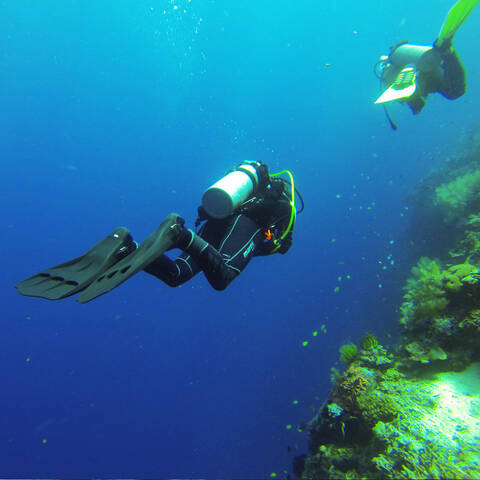
빈몸으로 OK! 서귀포 범섬에서 보트로 진행하는 제주도스쿠버체험다이빙 (풀장비+수중촬영)
A boat-based experience scuba dive at Beom Island off Seogwipo — full equipment provided, underwater photos included, no certification or experience required. Korea's clearest dive water.
- ·No prior experience or certification needed
- ·Full kit provided + underwater photos included in price
- ·Beom Island is widely regarded as Korea's clearest dive site
- ·Premium dive shops typically have English-capable safety briefings
- ·Best May-October — winter operations limited
- ·Premium price tier (highest on this list)
- ·Boat-based, so motion-sensitive divers should pre-medicate
Best for: Honeymoon couples paying for one premium memory, Korea-resident expats checking Jeju scuba off the bucket list, and confident first-timers with no certification but a willingness to try a 30-minute introduction in clear water.
English support: Most premium dive operators on Jeju have English-capable staff for safety briefings — diving instruction is internationally regulated and the standard PADI safety language is largely consistent across markets. That said, we don’t promise full English narration from arrival to departure. Frame this as: professional dive shop with English safety briefings on request, with most non-safety communication handled visually underwater anyway.
What you’ll experience: A 3-4 hour outing that starts with a shore briefing at the Seogwipo dive shop, a short boat ride out to Beom Island (a small uninhabited rock formation a kilometer off the south coast), a guided introductory dive in roughly 5-8 meter water with full kit provided, and underwater photos taken by the dive guide that you keep. No license required. The instructor stays within arm’s reach the entire dive. If you’ve snorkeled before and didn’t panic, you can do this.
Why it’s a honeymoon pick: Three things make this work as a honeymoon-tier experience rather than a budget activity. First, the water clarity at Beom Island in summer routinely hits 15+ meters of visibility, which is exceptional for Asian dive sites and rivals more famous destinations like Bohol or Okinawa. Second, the included underwater photos solve the camera-rig problem — you’ll have professional-grade memories without buying a GoPro housing. Third, the small-group, premium-tier format means you’re not crammed onto a 30-person dive boat; expect 4-8 guests max per departure, often a single couple or small friend group.
Honest cons: The seasonal restriction is real. May through October is the operating window. Late June through August occasionally cancels for typhoon-adjacent swell — see the typhoon caveat in the practical-tips section. December through March is essentially closed for experience dives even if the website lists availability; the water gets down to 12-14°C and the visibility crashes. If you’re traveling in winter, default to #3 (stargazing — year-round) or #6 (sunrise oreum — clear winter skies are actually beautiful).
Pairs well with: An afternoon at Jusangjeolli Cliff or Cheonjiyeon waterfall in Seogwipo, both within 15 minutes of the dive shop. Or, for the matched honeymoon day, evening stargazing (#3) under genuinely dark Jeju skies.
3. Jeju Premium Stargazing Tour (Same-Day Booking Available)
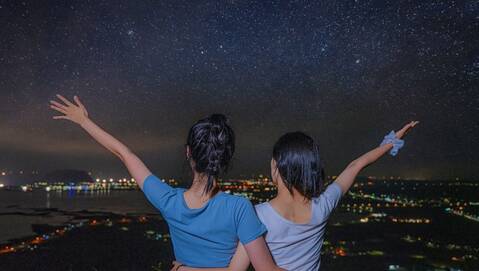
제주 프리미엄 별빛 투어(당일 예약 가능)
A 3-4 hour evening tour to one of Jeju's lowest-light-pollution astronomy sites, with telescope-assisted observation. Same-day booking accepted — rare on MyRealTrip and ideal for travelers with uncertain itineraries.
- ·Same-day booking accepted (rare flexibility for inbound travelers)
- ·Jeju has some of Korea's lowest light pollution
- ·Year-round operation (weather-dependent but not seasonal)
- ·Small-group, photogenic, photogenically silent
- ·Astronomy is largely visual — narration may be Korean
- ·Cancels in cloudy weather — Jeju has more cloudy nights than the keymap implies
- ·Late-evening start — book this for a night you don't have an early activity the next morning
Best for: Honeymoon couples (the single most-photographable evening activity on this list), first-time visitors who didn’t pre-plan and need a same-day option, and anyone whose Jeju itinerary has a hole in the evening that hotel-bar sitting won’t fill.
English support: Astronomy is largely visual — the experience is the sky, the telescope, and the silence, not the narration. Verify the host’s English level on the booking page if it matters to you. Practically, even with limited English the experience translates because the night sky doesn’t need a tour guide.
What you’ll experience: Pickup typically from a central Jeju City location around 7-8 PM (later in summer when sunset comes late), a 30-45 minute drive to one of several rotating low-light-pollution sites the operator uses depending on weather, and roughly 2-3 hours of telescope-assisted observation under what are genuinely some of Korea’s darkest skies. Jeju’s volcanic interior — particularly the central highlands around Hallasan — sits far enough from coastal city lights that the Milky Way is visible on clear moonless nights, which is increasingly rare in East Asia.
Why same-day booking matters: Most Jeju premium activities require 24-72 hours of lead time. This one accepts same-day reservations, which is genuinely useful for two scenarios. First, foreign travelers whose itineraries shift around weather and energy levels — you can decide at lunch that tonight’s the night and still get on. Second, K-drama fans and honeymooners who realize on day two that they want one more “wow” moment before flying out — same-day booking turns this from a planning nightmare into a casual decision.
Honest cons: Weather risk. Jeju has roughly 60-70 clear nights per year, fewer than expected for an island. The operator cancels and refunds for overcast nights, but if you only have two nights, there’s a real chance neither is clear enough. Build in a backup (a nice dinner, the Loveland sculpture park, or a moonlit walk along Hyeopjae Beach).
Pairs well with: A Seogwipo dinner before pickup, or an afternoon scuba dive (#2) earlier in the day for a full water-and-sky honeymoon-leg sequence.
4. 9.81 Park: Gravity Racing & Themed Rides (Rainy-Day Fallback)
![[선착순쿠폰/제주] 981 파크 입장권](https://dry7pvlp22cox.cloudfront.net/mrt-images-prod/2026/04/06/afF8/oy8fepKYOW.jpg?width=480&quality=70)
[선착순쿠폰/제주] 981 파크 입장권
Admission to 9.81 Park, Jeju's gravity-racing theme park — non-motorized downhill carts plus themed rides and partial indoor attractions. The single most-reviewed Jeju activity on MyRealTrip with 1,600+ reviews.
- ·Highest review count of any Jeju activity on MyRealTrip (1,608+)
- ·Multiple indoor attractions — works as a rainy-day or hot-day fallback
- ·Family-friendly, ages 5+
- ·Foreign-card payment supported at the gate
- ·Theme-park atmosphere — not for travelers seeking 'authentic Jeju'
- ·Half-day at most — pair with another activity to fill the day
- ·Gravity-cart courses can develop queues on summer weekends
Best for: Families with kids ages 5-14, groups of friends who want a high-energy half-day, K-content fans who recognize 9.81 Park from countless Korean variety shows, and any traveler whose outdoor day got rained out.
English support: Theme-park signage is largely visual — directional arrows, color-coded queues, ride-height markers. English handouts are available on request at the gate. Foreign-card payment is supported. Minimal narration required for the experience itself.
What you’ll experience: The headline attraction is the gravity-racing cart course — non-motorized downhill carts that use only gravity (hence the name, 9.81 m/s² being Earth’s gravitational acceleration) on a 1.8 km dedicated track that snakes through the park. It’s faster than it looks, and the carts have brakes, so it works for kids 5+ with adult supervision. Beyond the carts, there’s a VR zone, themed rides, an arcade, and a couple of indoor attractions that hold up in rain. Expect to spend 2-4 hours total, more if your kids fall in love with the carts.
Why it earns the family slot: Three things. First, the price is reasonable — around USD 21 per adult, less for kids. Second, the indoor attractions give you a rainy-day hedge that almost no other Jeju activity provides; on an island where weather can flip in an afternoon, that’s load-bearing. Third, the review base is enormous (1,608+ reviews at 4.7), which for a theme-park product means the experience is consistent — your kids won’t have a wildly worse day than the next family’s.
Why it’s also the rainy-day pick: The keymap and curation both call out the need for at least one indoor or weather-resilient activity. 9.81 Park is the strongest answer in MyRealTrip’s Jeju catalog. Slot this product as the flexible “if the day goes sideways” anchor in your itinerary, especially if you’re traveling June through September when sudden rain is common.
Honest cons: This is a theme park, not a “uniquely Jeju” cultural experience. Travelers chasing the slow-island feel should skip and go straight to #5 (dolphin) or #7 (forest). Cart queues stack up on summer weekends; aim for a weekday or arrive at opening in July-August.
Pairs well with: A late-afternoon stop at one of the nearby scenic spots in the central inland — Jeju’s interior is volcanic farmland, and a 30-minute drive in any direction from 9.81 Park lands you in green tea fields, lava-tube formations, or oreum hiking trails.
5. Wild Dolphin Boat Tour at Hamo, Daejeong
![[대정] 돌고래 투어 야생 돌고래와 함께 하모 돌고래 투어 체험!](https://dry7pvlp22cox.cloudfront.net/mrt-images-prod/2024/08/26/vTrx/h8m5L17vRD.jpg?width=480&quality=70)
[대정] 돌고래 투어 야생 돌고래와 함께 하모 돌고래 투어 체험!
A 1.5-2 hour coastal boat tour along Jeju's southwest coast looking for wild Indo-Pacific bottlenose dolphins. No captivity, no aquarium — these are free-swimming wild animals. Family-safe ages 5+.
- ·Wild dolphins, no captivity (animal-welfare narrative resonates strongly)
- ·Low entry price — under USD 20 for a genuine wildlife experience
- ·Family-friendly ages 5+
- ·Short outing (1.5-2 hours) — easy to slot into a half-day
- ·Weather-dependent — operator cancels and refunds if seas are rough
- ·Wild dolphins are not guaranteed — sighting rates are high but not 100%
- ·Boat operations primarily visual — minimal English narration
Best for: Families with kids ages 5+, first-time visitors looking for a uniquely-Jeju experience that won’t blow the budget, and Western travelers who specifically want to avoid captive-marine-mammal tourism.
English support: Boat operations are primarily visual — the captain points to dolphins, you look. Ranger and captain may have limited English. Minimal narration required; the dolphins are the show.
What you’ll experience: A short coastal cruise out of the Hamo area on Jeju’s southwest coast, where a resident pod of Indo-Pacific bottlenose dolphins (locally called “Jeju’s namdolge”) regularly feeds along the shoreline. The boat is small enough to feel intimate, large enough to be safe with kids, and the captain knows the pod’s patterns well enough to put you within reasonable viewing distance most days. Sightings aren’t guaranteed but are common — review feedback consistently mentions multi-dolphin encounters.
Why it’s the family pick: The combination is hard to beat. A genuine wild-animal encounter at a price point (~USD 18) that lets a family of four book it without flinching. The short duration means you can slot this into a half-day around lunch and not lose your whole afternoon to it. And the no-captivity angle matters — Western parents traveling with kids increasingly want to avoid the marine-mammal-captivity industry, and Jeju’s previous controversies around captive dolphins make the wild-tour alternative actively meaningful.
The animal-welfare context: Jeju has a globally noteworthy history here. In the early 2010s, a series of court cases and activist campaigns resulted in several captive bottlenose dolphins being released back into Jeju’s waters — an unusual precedent. Some of those released dolphins are now part of the resident pod this tour observes. The wild tour isn’t just a tourism choice; it’s a small endorsement of Jeju’s better-direction marine-wildlife approach.
Honest cons: Weather is the real one. The operator cancels and fully refunds for rough seas, but on the day-of, that’s still a missed activity. Build in a backup. Wild-animal sightings are also genuinely not guaranteed — sighting rates appear to be 80-90% based on review patterns, but the 10-20% who don’t see dolphins are sometimes vocal in reviews. Set expectations accordingly.
Pairs well with: An afternoon walk along Hyeopjae Beach (one of Jeju’s most photogenic) or a stop at the nearby Jeolmul Recreation Forest, both within 20-30 minutes of Hamo.
6. Sunrise Hunters: Climb a Volcanic Cone Before Dawn
![[제주 동쪽] 비포 선라이즈, 오름 일출 헌터스](https://dry7pvlp22cox.cloudfront.net/mrt-images-prod/2024/11/04/q4Hs/dHrMBHYkCE.jpg?width=480&quality=70)
[제주 동쪽] 비포 선라이즈, 오름 일출 헌터스
A pre-dawn small-group hike up a Jeju oreum (volcanic cone) for sunrise — locally led, photogenic, and emotionally aligned with the slow-Jeju mood of K-dramas like 'Welcome to Samdal-ri'. Perfect 5.0 rating.
- ·Perfect 5.0 rating across 112 reviews — strongest social proof per review
- ·Lowest-price pick on this list (~USD 14)
- ·K-drama mood (very 'Welcome to Samdal-ri')
- ·Small-group locally led — not a 40-seat bus tour
- ·Very early start — typical 4:00-5:00 AM pickup
- ·Korean-narrated — the experience is the hike, not the talk
- ·Conditional on clear weather — overcast sunrises do happen
Best for: K-drama fans (this is the closest you’ll get to the “Welcome to Samdal-ri” sunrise emotional beat without a fake “drama tour”), honeymoon couples chasing the most photogenic morning of the trip, and anyone who’d rather start one Jeju day with a memorable climb than another late-morning bus pickup.
English support: Korean-narrated. The experience is the climb and the sunrise — narration is minimal because everyone is mostly silent watching the horizon. If you want a guided English-narrated nature experience, default to a private booking via the Jeju pillar guide for options.
What you’ll experience: A pre-dawn small-group walk up one of Jeju’s eastern oreums — the volcanic cones (literally “small mountains”) that dot the island’s landscape, formed by parasitic eruptions during Jeju’s volcanic history. The climb itself is short and accessible — typical oreums on this circuit run 30-45 minutes up at a relaxed pace, well within reach of anyone with normal mobility. The reward is a 360-degree summit view of the east coast at first light, with the sea on one side and Hallasan’s silhouette on the other.
Why it’s the K-drama pick (without being a fake K-drama tour): We didn’t surface a “K-drama-themed tour” because most of those products are scammy bus circuits that drive past filming locations without stopping. The honest emotional payoff for K-drama fans isn’t standing where a specific scene was filmed — it’s experiencing the atmospheric mood the show built. “Welcome to Samdal-ri” wove its visual identity around exactly this kind of east-coast sunrise oreum landscape; the climb captures the show’s mood without pretending to be a literal location tour. “Our Blues” hits similar notes. If you came to Jeju partly because the dramas made the island feel like a place worth being slow in, this is the experience that delivers.
Why the perfect 5.0 holds up: 112 reviews is below our usual 100+ floor, so we double-checked the reviews. The pattern is consistent — small-group, locally-led, run by what appears to be a single Jeju resident who knows the oreums and the timing well. The 5.0 isn’t a sample-size artifact; it’s a product where every booker gets roughly the same well-executed pre-dawn experience. Single-operator dependency means we’ll re-check this listing in 6 months.
Honest cons: The 4-5 AM pickup is genuinely early. If your jet lag is still pulling you toward Korea-time evening, you’ll be tired. Build a quiet morning-after into the itinerary. Clear-sunrise weather is also not guaranteed — Jeju gets fog and overcast mornings, and an overcast sunrise is still atmospheric but not the postcard moment. The operator runs the hike regardless.
Pairs well with: Nothing — let the rest of the day be slow. A late breakfast, a beach walk, a long lunch, an afternoon nap. The point of getting up at 4 AM is having earned the rest of the day.
7. Scent Forest Healing Walk: A Locally-Guided Hidden Hike
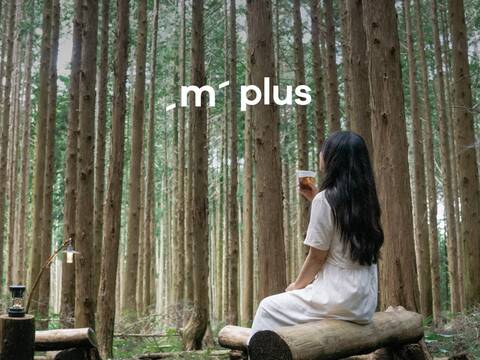
로컬들도 잘 모르는 비밀 장소에서 보내는 힐링 타임, 나만의 향기숲 여행
A small-group, locally-led half-day forest walk in a hidden Jeju location that even most local Koreans don't know. Slow-travel, sensory, rain-resilient under the forest canopy.
- ·Locally led by a Jeju resident — the kind of small-group product international OTAs don't carry
- ·Forest canopy makes this a rain-resilient option
- ·Slow-travel, sensory — a different pace from the rest of the list
- ·Strong 4.9 rating across 358+ reviews
- ·Korean-narrated — the experience is reflective rather than informational
- ·Single locally-led operator — listings can shift
- ·Not for travelers chasing photogenic spectacle — this is a quieter pick
Best for: Honeymoon couples drawn to slow-travel pacing, Korea-resident expats looking for depth beyond the bus-tour circuit, multi-generational families with older kids or grandparents, and anyone whose Jeju trip needs at least one day where the goal isn’t seeing more things.
English support: Korean-narrated. The experience is reflective and sensory — the forest does most of the talking. Even with limited English you’ll get the value, because the value is the walk itself, not the commentary. If you specifically want English-narrated nature interpretation, this isn’t the pick.
What you’ll experience: A half-day small-group walk through a Jeju forest location the operator describes as known mostly to locals. Without naming the exact spot (the operator’s whole differentiation is keeping it quiet), the experience is the kind of slow, canopied, scent-rich forest walk that Jeju’s volcanic interior produces — soil that holds rainwater, dense undergrowth, bird calls you don’t hear from the main hiking trails on Hallasan. The “scent” framing isn’t marketing-speak; Jeju’s forest understory genuinely produces strong aromatic notes from native cedar, wild herbs, and damp moss.
Why this is the locally-led-network pick: Klook, Viator, and GetYourGuide all sell roughly the same handful of large-bus operators in Jeju. MyRealTrip’s edge is aggregating independent local guides — small-group products run by Jeju residents with deep local knowledge that international wholesalers can’t replicate. This product is the clearest example of that edge in the list. You’re not getting a 40-seat coach to a famous tourist site; you’re getting a small group walking through a place a Jeju resident decided was worth showing.
Why it’s also the rainy-day pick: Forest canopy keeps light-to-moderate rain off you, and the experience is actually better in rain — wet forest smells stronger, the colors saturate, the pace forces you to slow down further. If your Jeju forecast is iffy, this pick gets stronger rather than weaker.
Honest cons: This isn’t a photo-spectacle pick. Honeymooners chasing the Instagram moment should default to #6 (sunrise oreum) for visual payoff and slot this as the day-three slow-down. Single-operator dependency is also worth flagging — we’ll re-check this listing in 6 months because solo-operator products occasionally go off inventory without warning. If you have specific dates locked in, book early.
Pairs well with: A Jeju traditional-tea-house stop afterward, or an early dinner of black pork (Jeju’s signature) at one of the Seogwipo restaurants. The forest walk leaves you in a slow-pace mood that doesn’t reward a high-energy follow-up activity.
8. Surfing at Jungmun Saekdal Beach: Lessons & Board Rental
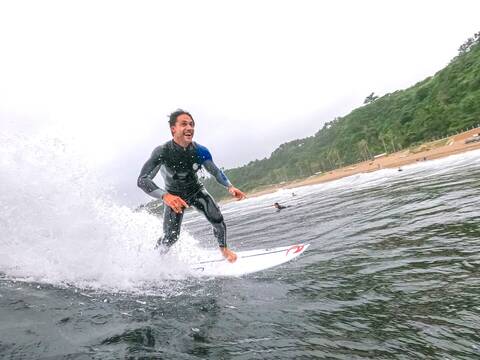
제주도 중문색달해변 서핑 강습,렌탈! 서퍼스제주
A 2-hour beginner surf lesson with board rental at Jungmun Saekdal Beach — Jeju's premier surf beach. Surfers Jeju is an established surf shop with strong reviews and international clientele.
- ·Jeju's premier surf beach (Jungmun Saekdal) — the right spot for the activity
- ·Established surf shop with strong reviews
- ·Beginner-welcome — no prior experience needed
- ·Surf instructors at Jungmun frequently teach international clientele
- ·Best April-October — winter schedule is restricted
- ·International English-language instruction usually available — confirm at booking
- ·Wave conditions vary day-to-day — operator may swap to flat-day pool drills
Best for: Korea-resident expats looking for a long-weekend social activity, K-content fans in their 20s who recognized Jungmun from countless music videos and variety shows, and first-time visitors who want one active beach experience without committing to scuba (#2).
English support: Surf instructors at Jungmun frequently teach international clientele — basic English instruction is commonly available, and surfing technique is largely visual (paddle, pop-up, balance). Confirm English-language instruction at booking if it matters; the operator’s response time on MyRealTrip messaging is generally same-day.
What you’ll experience: A 2-hour lesson at Jungmun Saekdal Beach, Jeju’s south-coast surf beach and the most consistent wave-producer on the island. Lesson format is roughly 20-30 minutes of beach instruction (paddling, popping up, ocean-safety basics), then 90 minutes in the water with the instructor close by. Board, wetsuit (in cooler months), and rash guard included. Wave size on a typical day for beginner instruction sits in the 1-1.5 meter range — easy enough to learn on, satisfying enough to actually catch.
Why surf earns the water-sports diversification slot: We already have scuba (#2, premium) and dolphin watching (#5, family). Surfing covers a different traveler — younger, more active, social, often traveling with one or two friends rather than solo or as a couple. Jungmun is the right spot for it; Jeju’s other beaches are mostly too small or too current-prone for beginner surfing. Surfers Jeju has been the establishment surf shop on this beach for years, with strong review consistency.
The K-content angle: Jungmun Saekdal Beach has appeared in dozens of K-dramas, K-pop music videos, and variety shows — most recently as one of the recurring backdrops in K-content built around Jeju’s beach culture. If you came to Korea partly because the music videos made the beaches look like that, this is the beach. Surfing it adds a participatory layer that walking past doesn’t.
Honest cons: Winter (December through February) has restricted operating hours and colder water — wetsuit-essential conditions. Wave consistency also varies; if you book on a flat day, the operator may pivot to pool drills or shorter water time, which is less satisfying. Mid-summer (July-August) has the best beginner waves but also the highest crowds.
Alternative: If the wave conditions or the wetsuit prospect are off-putting, swap to #5 (dolphin watching, calmer water) or #2 (scuba, deeper but more controlled).
All eight at a glance
Below is the side-by-side comparison. Filter by what matters most to you — rating, price, duration, or which traveler type fits — and read the full section above.
| Activity | Rating | Price (KRW + USD) | Duration | Best for |
|---|---|---|---|---|
| #1 East Coast Bus (Seopjikoji + 'Our Blues') | ★ 4.9 | around KRW 39,800 (~USD 30) | Full day | First-timer / K-drama |
| #2 Beom Island Beginner Scuba | ★ 4.9 | around KRW 100,000 (~USD 75) | 3-4 hr | Honeymoon / Premium |
| #3 Premium Stargazing (same-day) | ★ 4.9 | around KRW 70,000 (~USD 53) | 3-4 hr (evening) | Honeymoon / Couple |
| #4 9.81 Park (Rainy-Day Fallback) | ★ 4.7 | around KRW 28,000 (~USD 21) | 2-4 hr | Family / Friends |
| #5 Wild Dolphin Boat Tour | ★ 4.9 | around KRW 24,000 (~USD 18) | 1.5-2 hr | Family / Animal-welfare |
| #6 Sunrise Oreum Hunters | ★ 5 | around KRW 18,000 (~USD 14) | ~3 hr (pre-dawn) | K-drama / Honeymoon |
| #7 Scent Forest Healing Walk | ★ 4.9 | around KRW 29,000 (~USD 22) | Half day | Slow-travel / Rainy-day |
| #8 Jungmun Surf Lesson | ★ 4.9 | around KRW 60,000 (~USD 45) | ~2 hr | Expat / Friends |
The eight-pick average sits at 4.86, with six products clearing 100+ reviews. Half of the picks come in under USD 22, and two of the eight (the scuba and the stargazing) sit in the premium-honeymoon bracket. This is a curated cut filtered for English-friendliness, persona coverage, and seasonal honesty.
Practical tips for first-time Jeju visitors from Seoul
Getting from Seoul to Jeju. The default and correct answer is fly. Gimpo Airport (GMP) and Incheon Airport (ICN) both run Jeju routes nearly hourly during daytime, with flight times of roughly 60-70 minutes. Round-trip fares typically range KRW 50,000-150,000 (~USD 38-115) depending on season and lead time, with low-cost carriers (Jeju Air, Jin Air, T’way) consistently cheaper than Korean Air or Asiana. The ferry option from Mokpo or Wando exists but takes 4-5 hours minimum and is rarely worth it for foreign travelers — the flight is faster, often cheaper, and skips the need to first get to a southwest-coast ferry port.
Do you need a rental car? It depends on your itinerary. If you’re booking the picks on this list and staying in either Jeju City (north) or Seogwipo (south), the answer is no — most picks include hotel-area pickup or a meet-at-station format. If you want to explore Jeju’s interior independently, drive the perimeter highway, or hit beaches that aren’t on the main bus routes, a car helps. Foreign drivers need an International Driving Permit (IDP — get this in your home country before flying); the Korean rental shops will not accept your home-country license alone. Driving in Jeju is straightforward outside the city centers; signage is bilingual on highways.
English support at the airport and hotels. Both Gimpo and Jeju airports have English signage and English-speaking information desks. Major hotels in Jeju City and Seogwipo (Lotte, Shilla, Parnas, etc.) have English-fluent front-desk staff. Outside hotels and major restaurants, English drops off quickly — basic translation-app fluency is essential. Korean younger generations (under 30) usually have functional English; older folks rarely do.
Foreign credit cards. Visa, Mastercard, and Amex are accepted at hotels, MyRealTrip activity bookings, the airport, and most Seogwipo and Jeju City restaurants. Smaller restaurants in rural areas, traditional markets, and some taxi drivers prefer cash — carry KRW 50,000-100,000 in cash as a backup. Note that some Korean payment apps (Naver Pay, Kakao Pay) require a Korean bank account and won’t work for foreign visitors; ignore these and use your physical card.
Aug-Sep typhoon season — important. Jeju sits directly in the typhoon belt. Late August through September has a real probability of typhoon-related cancellations or flight delays. If you’re booking an outdoor or water-based activity (#2 scuba, #5 dolphin, #8 surf, even #1 east bus on bad days) during August or September, build a one-day buffer into your itinerary. Operators do refund weather cancellations, but a missed flight back to Seoul can cascade through the rest of your trip. Travel insurance that covers weather-related disruptions is worth the cost during this window. October through July is meaningfully more reliable.
Best months to visit Jeju. April through June (cherry blossoms early, then green explosion) and October through early November (autumn colors, mild temperatures) are the consensus picks. July and August are hot, humid, and wet but the water sports are at their peak. December through March are quiet and surprisingly atmospheric — fewer tourists, clearer winter skies for stargazing (#3) and sunrise oreum (#6), but limited water-sports availability.
Seoul-to-Jeju 2-day itinerary template. Day 1: Morning flight from GMP or ICN, arrive Jeju by lunch, drop bags, take #1 East Coast Bus (Seopjikoji + Seongsan in afternoon), Seogwipo dinner. Day 2: Pre-dawn for #6 Sunrise Oreum, late breakfast, half-day at #4 9.81 Park or #5 Dolphin (kid-dependent), evening flight back to Seoul. For three or four nights, expand into #2 scuba, #3 stargazing, and #7 forest walk. We’ll cover this in depth in the future Jeju from Seoul guide.
FAQ
Is Jeju Island worth a separate trip from Seoul?
Yes if you have at least two nights to give it; no if you're trying to fit it into a 5-day Korea trip that already includes Seoul, Busan, and the DMZ. Jeju is a separate volcanic island with its own pace, food culture, and geography — it doesn't reward a rushed day trip. The travelers who get the most out of Jeju are honeymoon couples extending Seoul, K-drama fans on a pilgrimage, and first-time visitors with 7+ days who want one non-urban leg of the trip. If you don't fit any of those profiles, your time is probably better spent extending Seoul or adding Busan.
Do I need to rent a car in Jeju?
Not for the picks on this list — most include hotel-area pickup or a central meeting point, and Jeju has a workable bus network connecting Jeju City and Seogwipo. You'd want a car if you plan to explore the interior independently, drive the coastal perimeter at your own pace, or visit beaches off the main bus routes. Foreign drivers need an International Driving Permit (IDP) issued in your home country before flying — Korean rental shops won't accept your home-country license alone. For a 2-3 night trip built around bookable activities, skip the car.
Are the activities available with English-speaking guides?
Mixed. Two products on this list come with explicit English-capable staff: #2 (Beom Island scuba — premium dive shops typically have English safety briefings) and #8 (Jungmun surf — international surfer clientele). Three products are largely visual experiences where minimal narration is needed: #3 stargazing, #4 9.81 Park, and #5 dolphin watching. The remaining picks (#1 east bus, #6 sunrise oreum, #7 forest walk) are Korean-narrated; the experiences themselves are visual or sensory, and Korean-speaking guides routinely host English-speaking guests with translation-app handouts. If full English narration is non-negotiable for you, default to the scuba or surf picks, or message the operator before booking.
What's the best time of year to visit Jeju?
April-June and October-early November are the consensus picks — mild temperatures, low rainfall, cherry blossoms in spring and autumn colors in fall. July-August is hot, humid, and wet but peak season for water sports (scuba, surf, dolphin). December-March is quieter, with surprisingly clear skies for stargazing and sunrise hikes, but water sports are limited. Critically: late August through September is typhoon season — typhoons can cancel outdoor activities and delay flights, so build buffer days into your itinerary if you're traveling in this window.
Should I fly or take the ferry from Seoul to Jeju?
Fly. Gimpo Airport (GMP) and Incheon Airport (ICN) both run Jeju routes nearly hourly during daytime hours, with 60-70 minute flight times and round-trip fares ranging KRW 50,000-150,000 (~USD 38-115). Low-cost carriers like Jeju Air, Jin Air, and T'way are consistently cheaper than Korean Air or Asiana for this route. The ferry from Mokpo or Wando takes 4-5 hours minimum and requires first traveling to a southwest-coast port — for foreign travelers, the flight is faster, often cheaper, and dramatically less hassle. The ferry only makes sense if you're bringing a car or you specifically want the slow-travel ferry experience.
What's the cancellation policy for MyRealTrip Jeju activities?
Most MyRealTrip activities offer free cancellation up to 24 or 48 hours before the start time, with partial-refund or no-refund windows beyond that. Weather-cancellation policies (especially relevant for #2 scuba, #3 stargazing, #5 dolphin, and #8 surf) are typically handled by the operator with full refund. Specific terms vary by operator, not by the platform — read the cancellation policy on each product page before paying. For peace of mind, especially during August-September typhoon season, travel insurance covering non-refundable activity bookings is worth the cost.
Are there genuine K-drama filming-location tours in Jeju?
Most products marketed as 'K-drama tours' in Jeju are scammy bus circuits that drive past filming locations without stopping or contextualizing. The honest emotional payoff for K-drama fans isn't standing where a specific scene was filmed — it's experiencing the atmospheric mood the show built. The east coast bus tour (#1) walks you through Seopjikoji from 'Our Blues' as a natural stop on its scenic loop. The sunrise oreum hunters (#6) capture the 'Welcome to Samdal-ri' visual mood without pretending to be a literal location tour. We'll cover dedicated K-drama Jeju content in the future Jeju K-drama Locations guide on the pillar; for now, these two picks deliver the most honest version of the experience.
Wrap-up — what to read next
This article is the broad overview for first-time English-market visitors evaluating Jeju. If you’ve decided which experiences to anchor your trip around, the deeper guides below take each persona and unpack it in detail.
- Jeju Island Travel Guide 2026 (Pillar) — the full Jeju resource, with logistics, neighborhoods, food, and seasonal planning.
- Things to Do in Jeju with Kids: Family-Tested Picks — dedicated family content covering age-appropriate activities, indoor fallbacks, and English-narrated options.
- Jeju K-Drama Filming Locations: A Fan’s Walking Guide — the deep-dive K-drama pilgrimage piece — “Our Blues”, “Welcome to Samdal-ri”, and the spots that aren’t on every other listicle.
- Jeju from Seoul: Flight, Ferry, and a 2-Day Itinerary — the logistics-first guide for inbound travelers extending a Seoul trip.
- Jeju Honeymoon: 8 Romantic Activities Worth the Spend — premium-tier picks for couples, with private-tour options and sunset/sunrise sequencing.
If you came to this article via Seoul-trip planning, the sister article is Best Things to Do in Seoul: 10 Picks for 2026 Travelers — the same editorial standard for the capital, with DMZ tours, palaces, and English-friendly food walks.
Prices and availability are subject to change — confirm everything on MyRealTrip’s product pages before you commit. Aug-Sep travelers, build typhoon-buffer days into your itinerary.